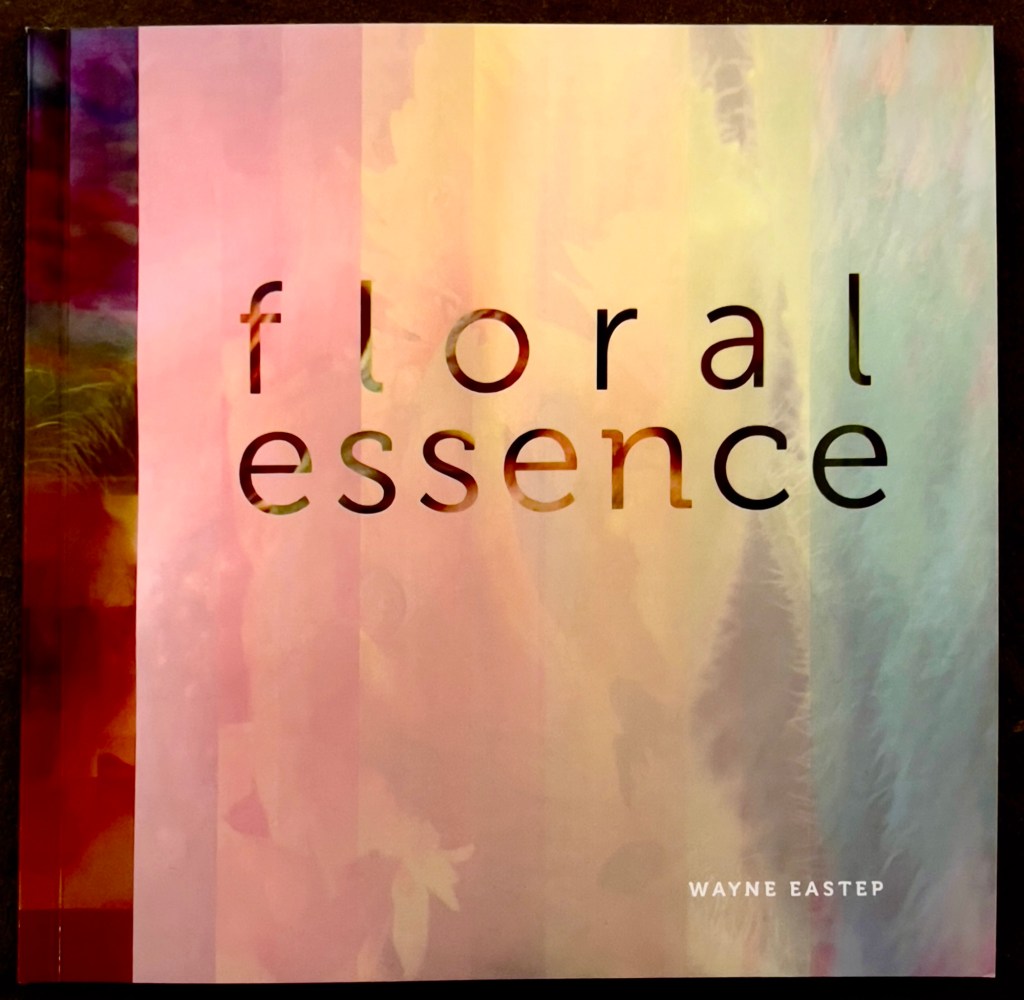
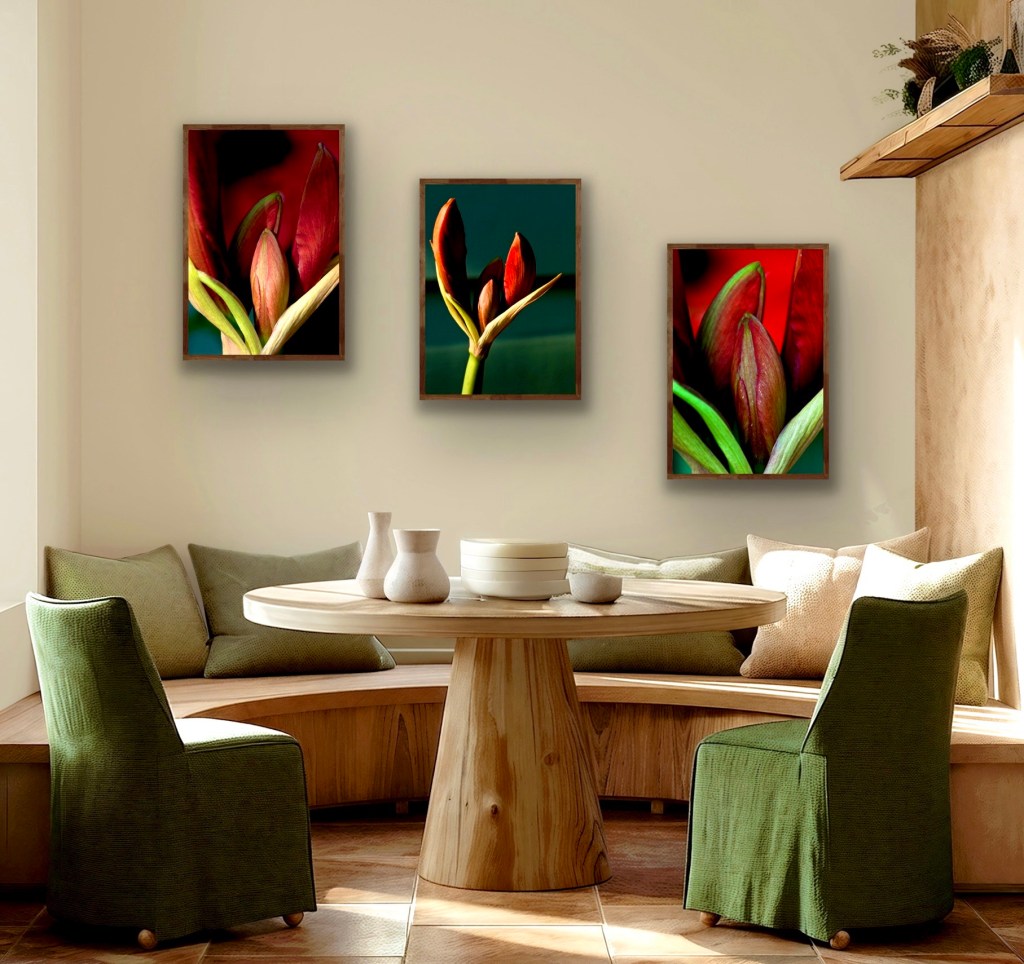
The series “Floral Essence” comes to a finale. A post about the Amaryllis feels like the perfect subject at the right time with which to conclude this series.
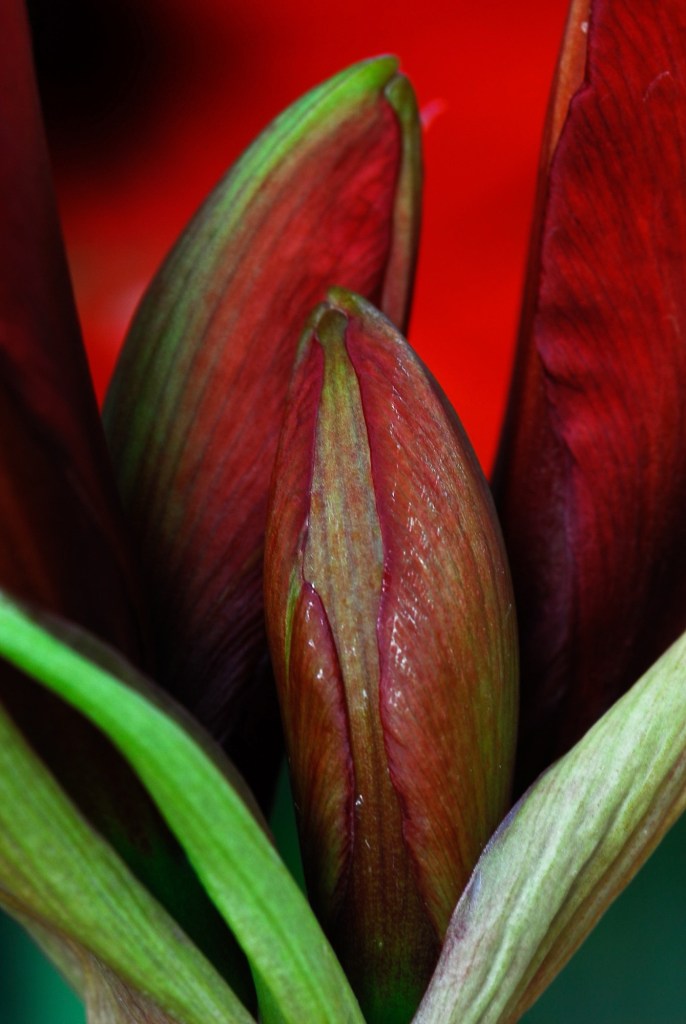
As holidays near, wax-dipped Amaryllis bulbs show up in the shops, ready to brighten the gray winter days with color.
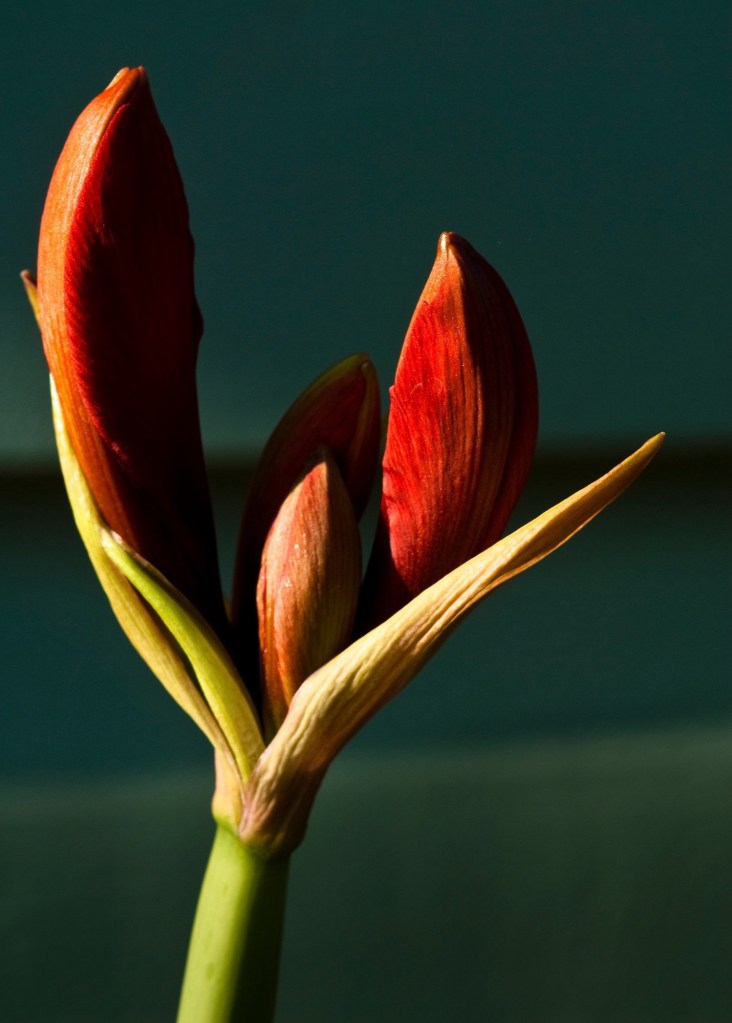
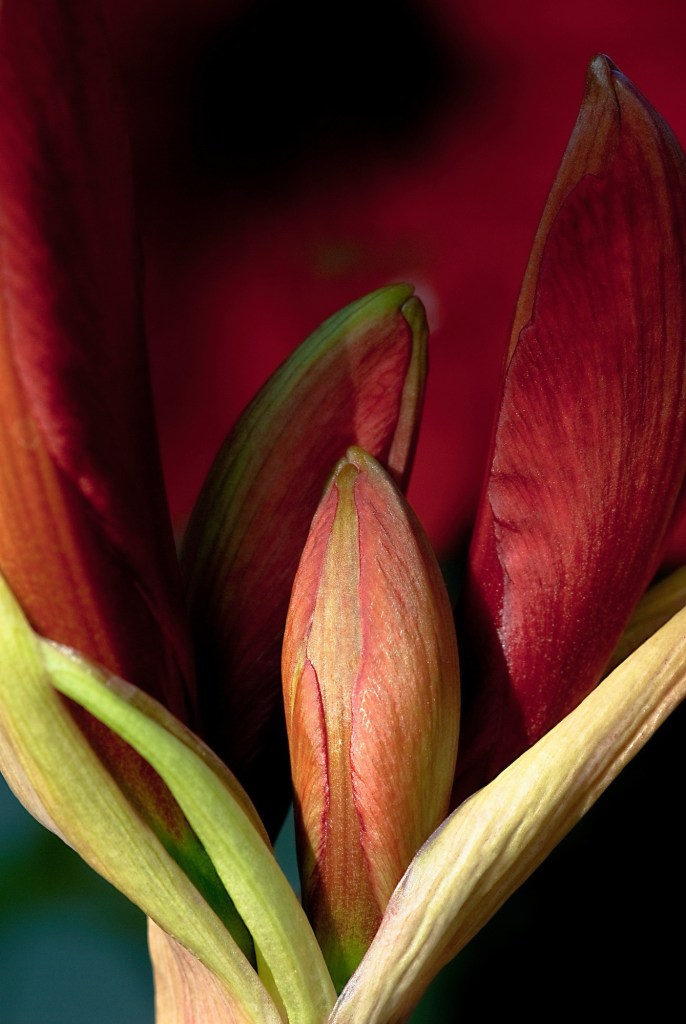
Amaryliss buds
Named from the Greek word for “to sparkle,” it is fitting that the Amaryllis blooms in winter, around Christmas.
Given their sturdy stems and vertical profile, Amaryllis symbolize strength, pride, and determination. When the flowering phase ends, you can cut the stem and preserve the bulb; it will flower again next year. With proper care, it can live for up to 75 years.
Amaryllis buds
Thank you for following Floral Essence. It has been an inspiring journey through the language of flowers.
An exceptional monograph is on the way, stay tuned!
Back to work on a new series about a different subject.
Feather grasses growing on the Steppes of Kazakhstan
Feather Grasses, like these near Sergeyevka, Kazakhstan, have grown for millennia in the thin topsoil of the Steppes; some varieties are now scarce or endangered species. The Steppes were covered in this ideal pasturage prior to the Soviets’ misguided Virgin Land Reclamation policy of the 1950s, under which nearly 25 million hectares (approximately 62 million acres) of the northern Steppes were plowed to plant wheat.
The feather grasses provide nutrition for horses, cattle, sheep and goats, ensuring a sustainable food source for nomads.
The sea of grasses move in waves with the wind, nurturing a soul that’s living in relationship with nature.
Practicing photography can be much like practicing meditation. Both invite us to slow down and truly see. They heighten our awareness, sharpen our attention, and help us become more attuned to the quiet details that often pass unnoticed. This image is an expression of that mindful practice.
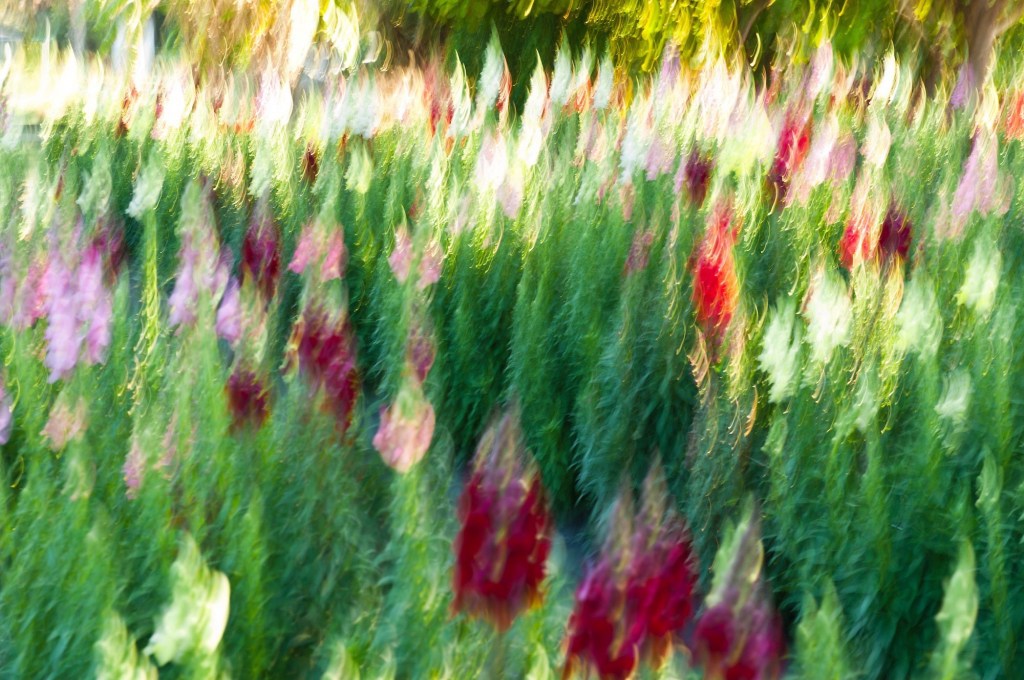
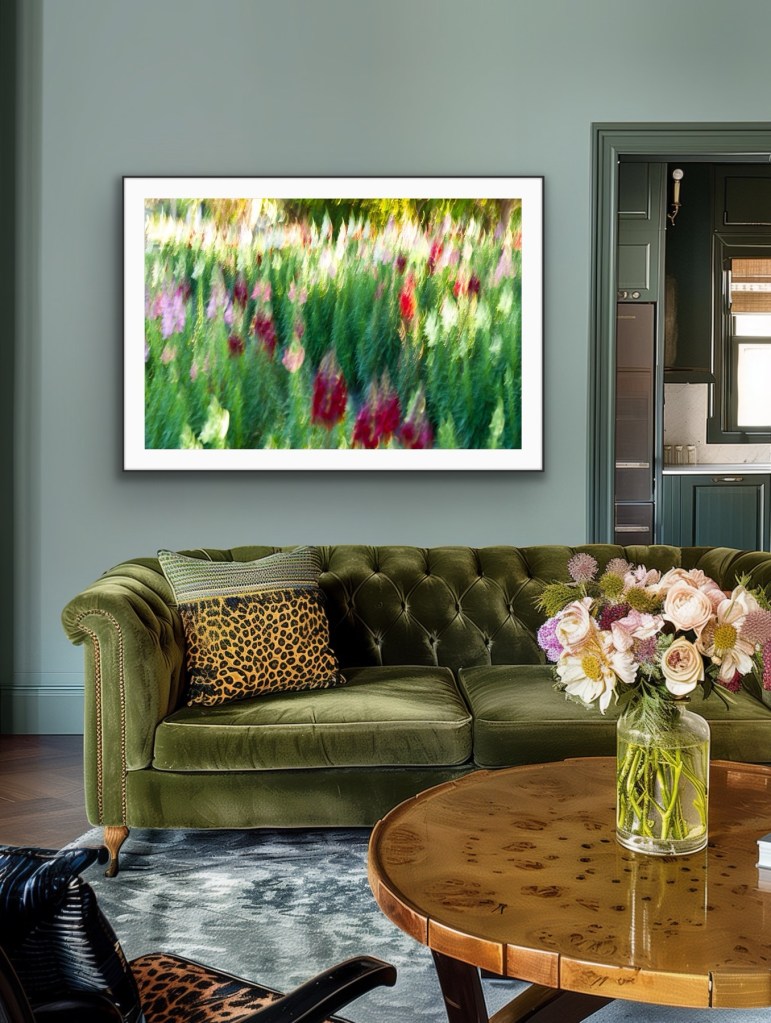
While driving near Sarasota, a field of snapdragons caught my eye—just a glimpse of color in my peripheral vision. I pulled over, spoke with the property owner, and was welcomed to wander the field with my camera.
As I began photographing, a gentle wind set the flowers in motion. In that moment, I saw not simply a field of snapdragons but blossoms dancing in the wind. I worked to capture the movement of the wind through the petals—more than a still image, a sense of motion and energy.
This photograph is the outcome of years of patient observation and practice. It also reflects what happens when we allow the mind’s eye to see beyond what is in front of us—when imagination meets perception, and feeling becomes form.
This series of images is part of a larger collection called Floral Essence. I’ll share more about that in the near future.
To see this image and more flower pictures, visit the gallery Flowers at: www.wayneeastep.com
Mother’s Day was approaching, and I found myself thinking about my mother-in-law. I called the wholesale florist I was working with and ordered two dozen white roses. When I brought them home and arranged them in a vase, one rose stood out—it appeared flawless.
A flawless white rose bud.
I gently pulled it from the bunch and studied it closely. Something about the purity of its white petals and their perfect symmetry captivated me. I took it to the studio and spent hours lighting and studying that single bud. The exercise became a kind of meditation.
Since then, I’ve often reflected on the blessing of creating art—how it can draw us into a deeper relationship with the simple act of seeing.
Reflecting on beauty and the creative process reminds me of Rumi’s poem.
A flawless white rose bud.
“What was said to the rose that made it open was said to me here in my chest.
What was told the cypress that made it strong and straight,
What was whispered the jasmine so it is what it is,
whatever made sugarcane sweet,
whatever was said to the inhabitants of the town of Chigil in Turkestan that makes them so handsome,
whatever lets the pomegranate flower blush like a human face,
that is being said to me now. I blush.
Whatever put eloquence in language, that’s happening here.
The great warehouse doors open; I fill with gratitude,
chewing a piece of sugarcane,
in love with the one to whom every ‘that’ belongs.”
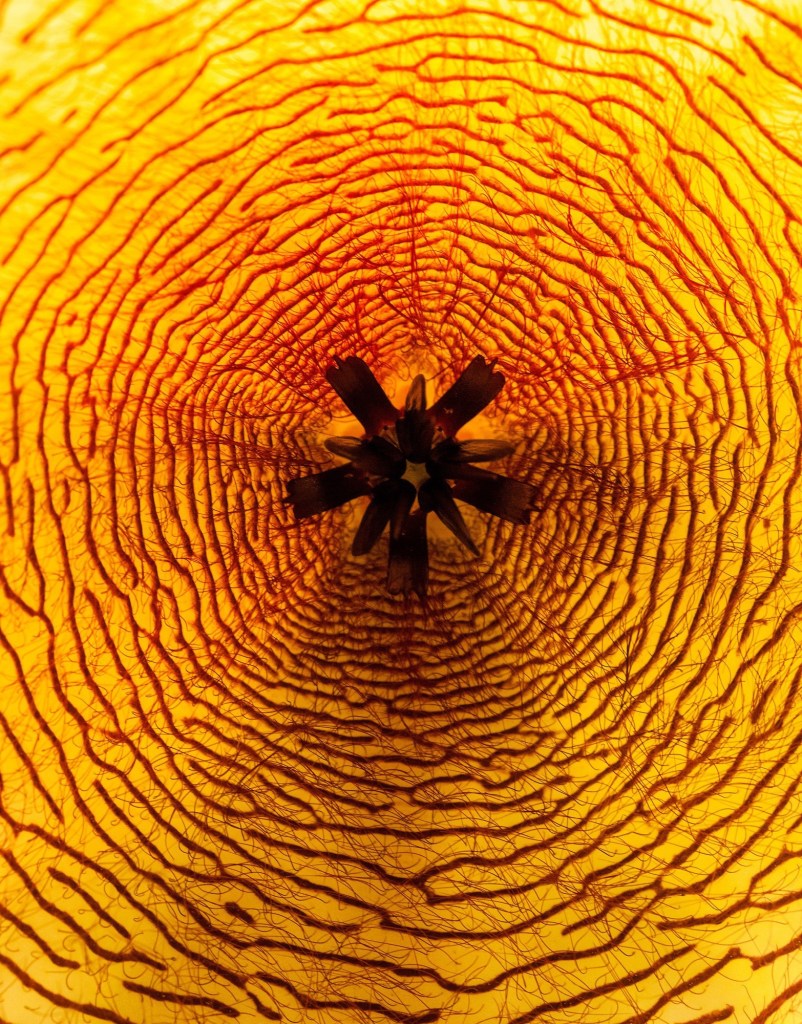
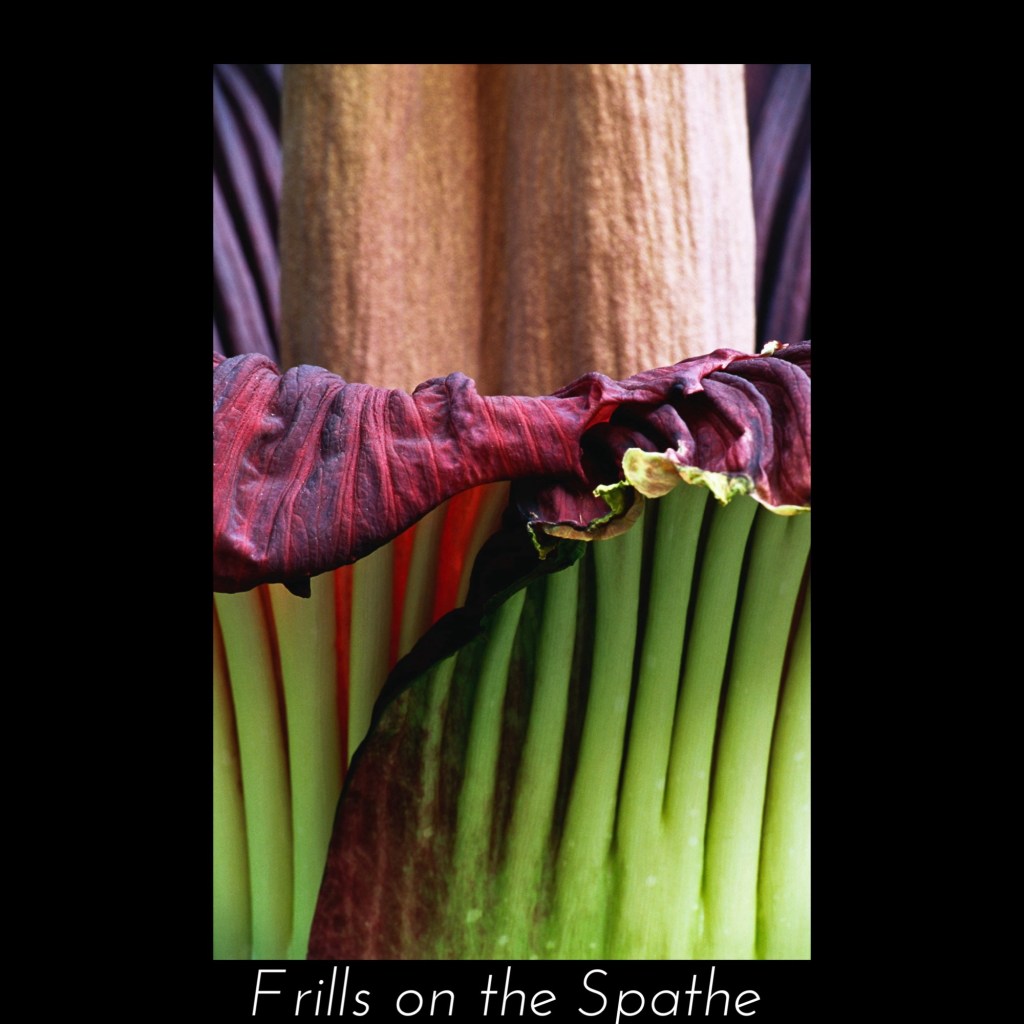
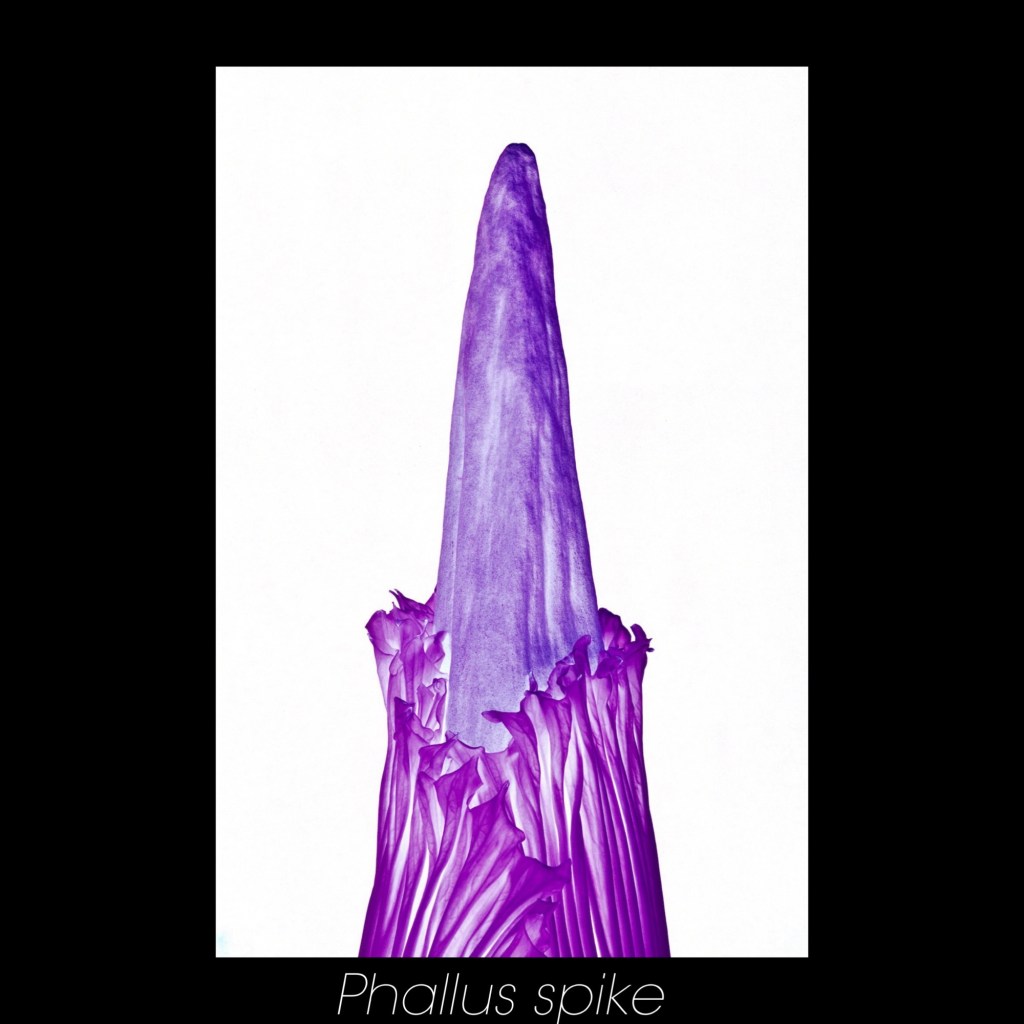
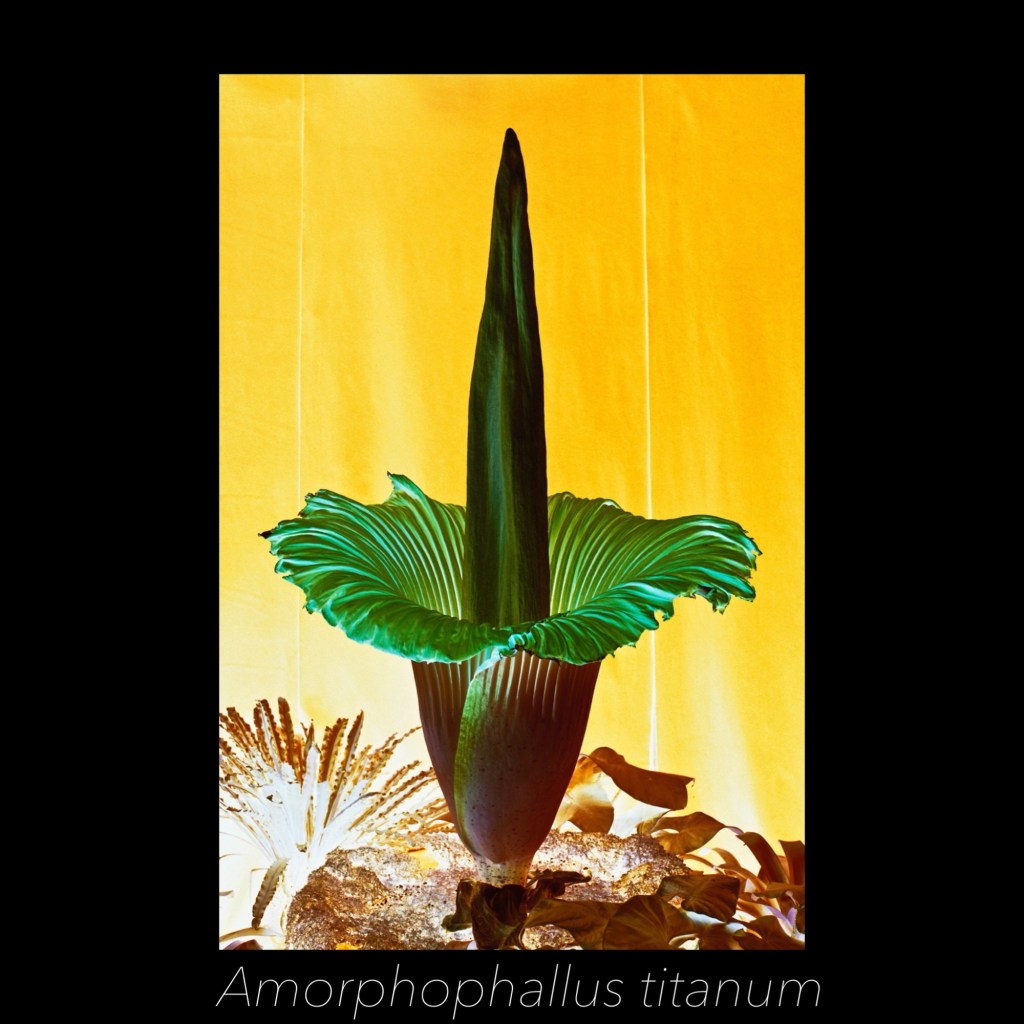
The Amorphophallus titanum is the largest unbranched inflorescence flower in the world. The plant grows to between 6 and 12 feet tall. With a name and size like that it’s no wonder it makes the news when it blooms.
Phallus Spike
From bulb to bloom can take up to ten years. After that long wait the bloom only lasts for about 24 to 48 hours. The plant originates in Sumatra in Indonesia.
Film cross-processed | Amorphallus titanum
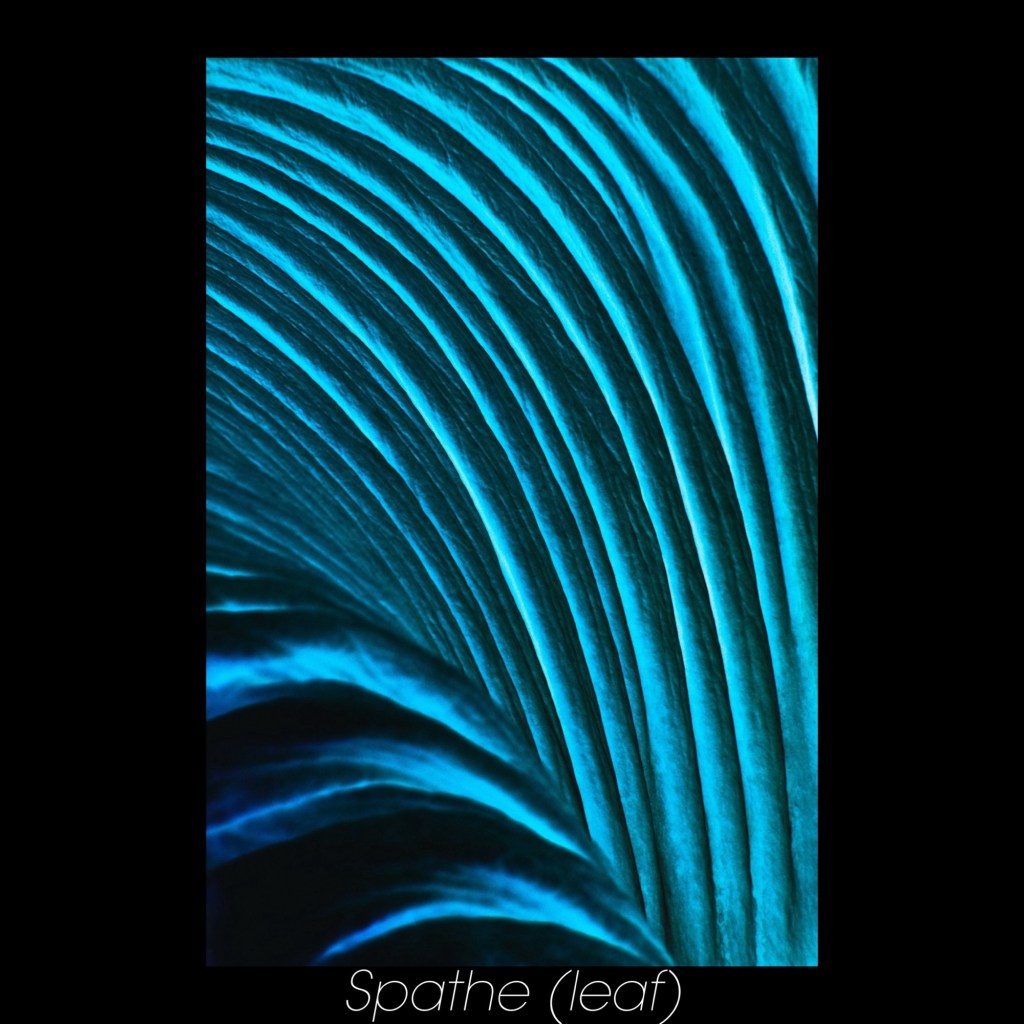
Because of this plants unusual resume I thought how can I make an image that suggests its dramatic presence. I settled on cross-processing some of the images to evoke the energy of this amazing plant. Cross-processing is when you use positive film and process it in negative chemistry. Doing this you never know what you’ll get.
Spathe (leaf) Amorphophallus titanum. Film image
This series of images is part of a larger collection called Floral Essence. I’ll share more about that in the near future.
To see these images and more flower pictures visit the gallery Flowers at www.wayneeastep.com
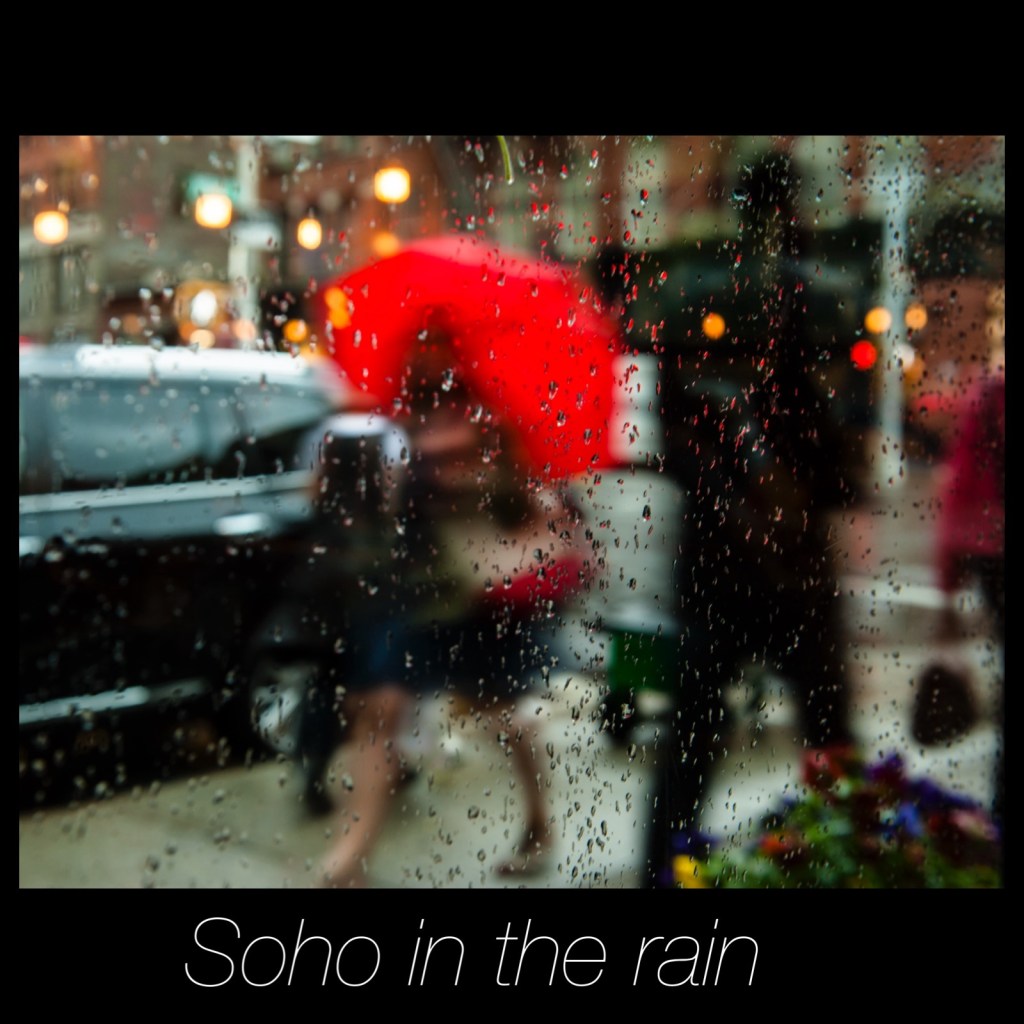
Like many children, I loved to go out in the rain and splash in puddles on the street.
Rain, like a cloud, is easily taken for granted. Water is integral to our existence. When we pause and observe, we have the chance to get in touch with something elemental in our lives.
Hurricane Milton, Sarasota, Florida
Different types of rain elicit a wide range of feelings. There is gentle, poignant melancholy in a light, mid-afternoon rain. It feels safe – even reassuring. Rain is a symbol of renewal and rebirth. When rain comes in excess it can be terrifying, bringing the potential for destruction. We use our technology to build roads, canals, bridges, levees, and dams – assuming we can control nature. Then a devastating storm comes and we are painfully reminded of our limitations and the need to live in ways that are in harmony with nature, respecting its power.
I can remember a number of times when I was about to leave a cafe in New York City and a thunderstorm delivered a torrent of rain, giving me the excuse to stay put, have another cup of coffee, and share more time with a friend.
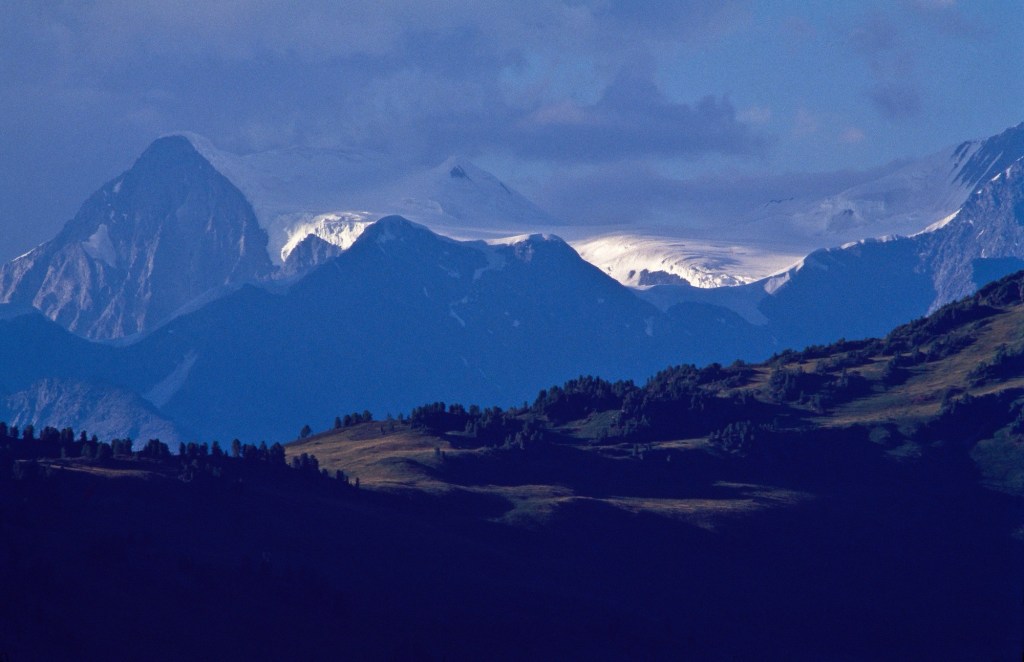
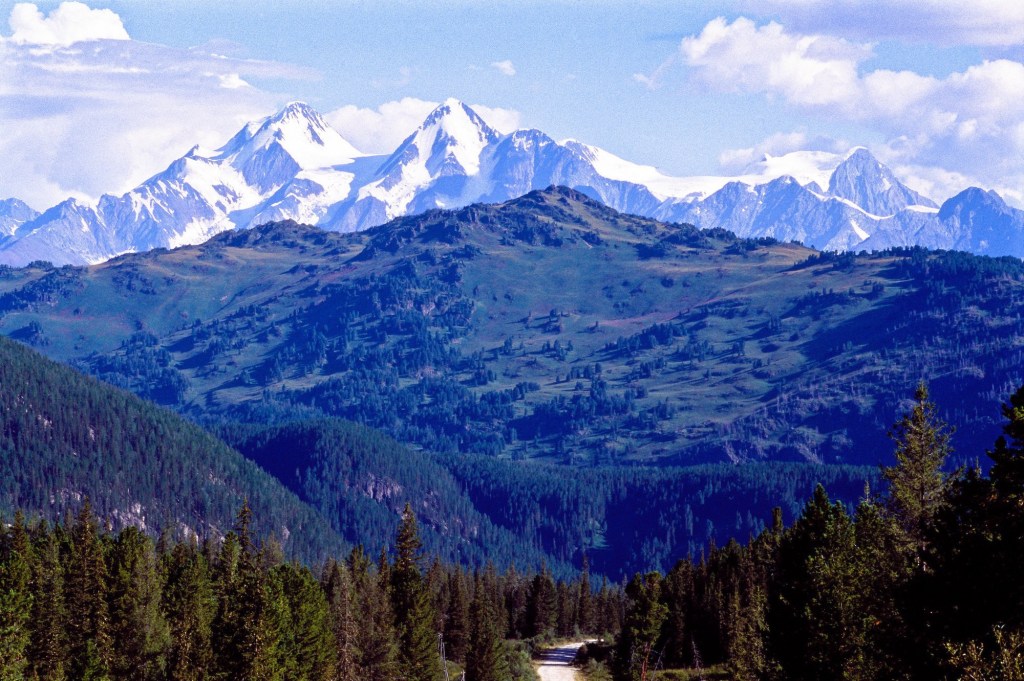
The “golden mountains” is a name given to the Altai range since ancient times. The mountains run along Kazakhstan’s northeastern border with Mongolia, China, and Siberia. It is noted for its rivers, waterfalls, pure springs, and spectacular vistas, and is home to the totemic snow leopard and argali mountain sheep. Mount Belukha is the tallest mountain in the Altai range, rising more than 4,500 meters, or nearly 15,000 feet. The peak is often shrouded in clouds and has its own unique persona, one steeped in history and religion. It has witnessed Chingis Khan invading with 200,000 Mongols, and listened as the chants of Tibetan Buddhists, and the songs and laments of shamans echoed off its sheer cliffs.
It is traditionally called Üch Sümer, meaning “three peaks.” Belukha may be Sumeru, the mythical Central Asian mountain of Buddhist belief, the center of Shangri-la (Shambhala), where only the spiritually advanced may enter.
“Golden Mountains”
There are many magnificent mountain peaks in the world, and we admire them for their grandeur. Belukha calls us to silence. As we stand in its presence, awe fills us, and we start to sense something unknown and full of energy.
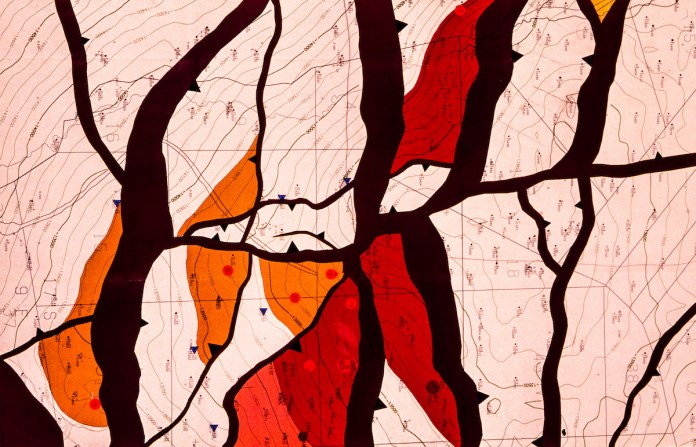
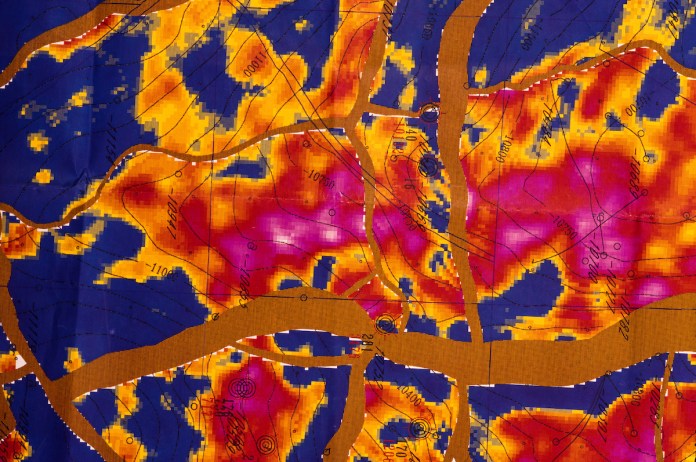
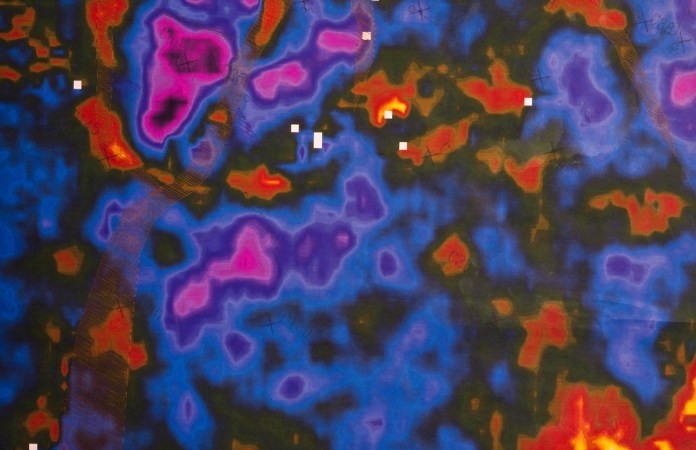
Abstract Images are a common feature in our minds and world
Abstract art can help us see parallels and sense echoes between our aesthetic expression and forms in science and nature.
Sonar Image, floor of the Gulf of Mexico
At first glance, these images appear to be abstract art. Under closer examination, we see that they are scientific images of the ocean floor indicating deposits of gas, crude oil, and voids.
Sonar image of oil and gas reserves, Gulf of Mexico
Imaging of the brain produces similar abstract images. We have a natural capacity to know these shapes and use them in abstract art. Upon deeper reflection, we realize that we have the capacity to understand and express these insights through art. The cognitive function of the brain is what we refer to as the mind. Therein lies a universe of symbols and archetypes that manifest as innate knowledge. This may be why we are touched by abstract art. The art does not objectively describe something that exists as an object. It expresses something that we feel and know, almost like a memory from a dream
Sonar Imaging showing oil and gas reserves, Gulf of Mexico
To see these images and others in my photographic archive, visit my website: WayneEastep.com
















 wayne eastep's blog