Let the wildlife call the shots.
Author Archives: Wayne Eastep

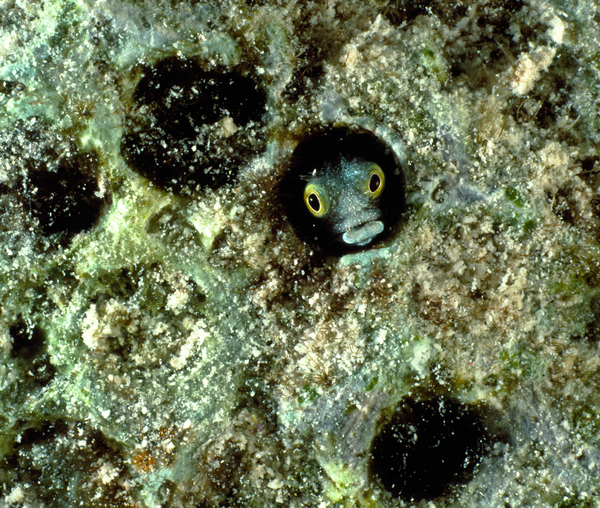
Secretary blenny (Acanthemblemaria maria). Blennies take up residence in tiny abandoned holes in coral. Most secretive, they spend most of their time hiding inside or cautiously venturing to the opening of their coral home. They are tiny usually less than 8 cm. long. Bonaire
I saw this blenny dart into a small hole in the coral head. Slowly I approached and sat my camera’s down on the ocean floor, slowed my breath and waited. Over the next forty minutes I mainly did nothing but watched and waited. The blenny would peak it’s head out of the hole and dart back inside. I kept repeating the same idea over and over in my mind…” I don’t want to hurt you, you’re wonderful, I just want to make a picture”. The blenny started to stay out longer. Gently I picked up my camera waited for the blenny to come out and stay, when it did I made one exposure, the one you’re looking at.
More underwater images can be seen at: EastepPhotography.com
Share this:

Let the wildlife call the shots

Polaroid image on St. Lucia of a Rasta man and Rooster.
What camera should I use? I’ve lost track of the number of times I’ve been asked this question. I learned on an assignment for Polaroid that it did not matter what camera I use. Creating an image is mostly about the way I see. I grant that a particular lens or camera may give me a technical tool that helps craft the image. When I photographed for Polaroid I was limited to the camera and film they provided. The goal was to demonstrate that fine art images could be created using only Polaroid film and a Spectra camera. These are two of many images I made for Polaroid. The images won awards in a number of categories and proved to be successful in promoting the Spectra camera.
I learned from this assignment that creating images was mostly about the way I see and minimally about what camera I use. There’s a saying among working photographers that “the best camera is the one you have with you”. These days I always have my “smart phone” with me and am pleased with the images I am creating. I love the spontaneous feel of the images. In coming posts I’ll share some of those with you.
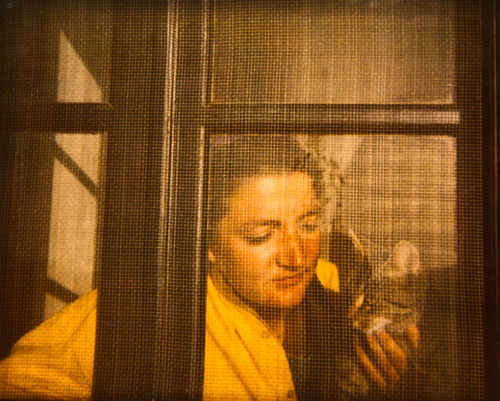
Polaroid image, Crete, Greece
Share this:

What Camera Should I Use?
Generation to Genration

Japanese cedar trees near Kyoto, Japan.
Japanese cedar trees (Petasites japonicus) with branches cleared to develop a smooth exterior. Tree trunks are used as a feature in living room alcoves. Children harvest the trees their grandparents planted, nurture and cultivate trees their parents plant and plant new trees for future generations. West of Kyoto, Takao area, Japan. To see more images from Japan visit EastepPhotogrpahy.com
Share this:

Simply Beautiful
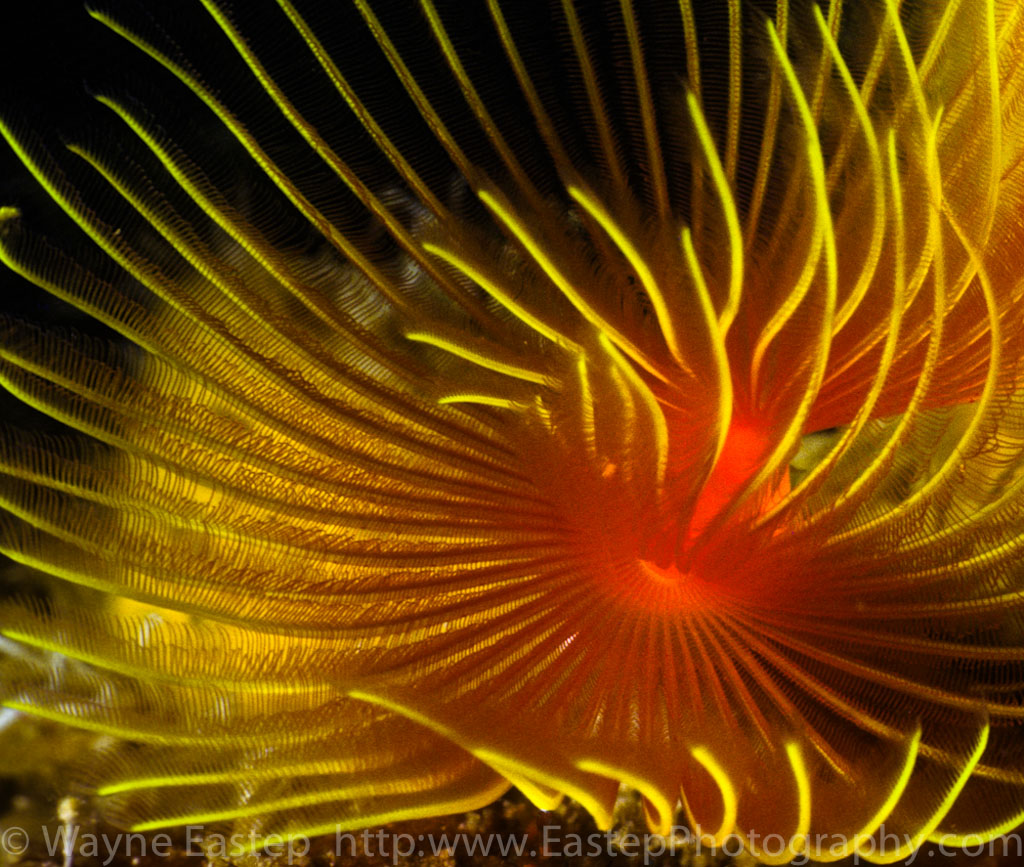
Serpulid Tubeworm (Ponastegus stellatus), Saba
This image of a Tubeworm photographed in Saba is beautiful. Rather than saying more I’ll leave it at that.
To see more of my underwater images visit: EastepPhotography.com
Share this:

Artist’s Primary Source, Nature
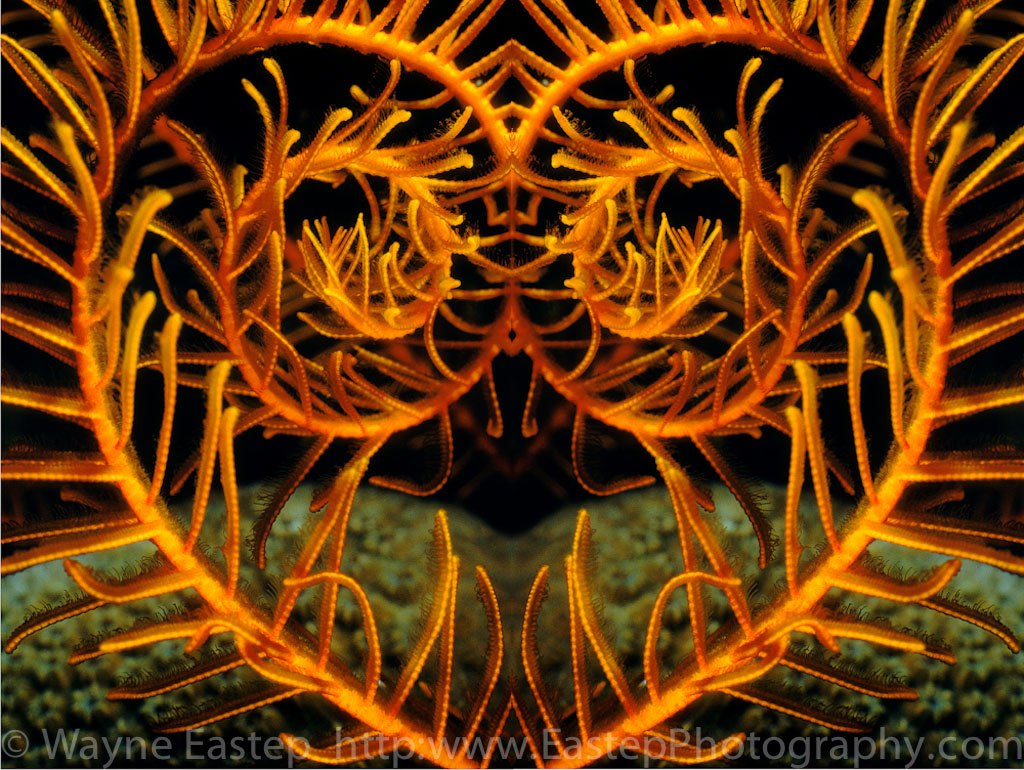
Orange Sea Lily (Nemaster rubiginosa) Bonaire
One of the reasons artists collect so much stuff; rocks, feathers, shells, crushed cans, you name it, is because they have a talent for seeing elements of design in everything. Shapes and forms in the natural world awakens a sensibility that we recognize as having a “sense of rightness,” Mark Getlein, Living With Art.
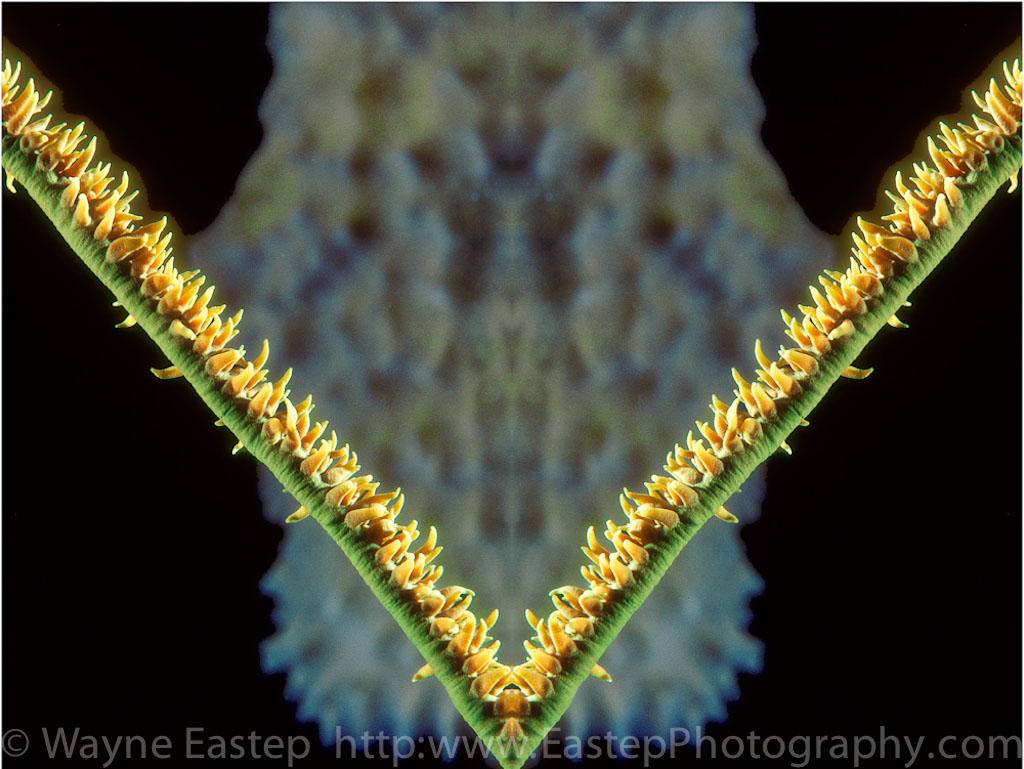
Sea Rod (Gorgonian coral) Bonaire
Focusing on the natural world engages our imagination and inspires a creative response. Design principles from nature show up in science, engineering, architecture, art, textiles and fashion.

Sea Fan Pan (Gorgonia ventalina) Grand Cayman
The approach I took to photographing marine subjects for the book The Living Seas was to concentrate on design within marine life. I looked with curiosity at the line, light, shape and form I saw within the underwater world. Compositions focused on the central design feature of the subject I was studying.
A few years ago a project came along which gave me the opportunity to work with one of the finest designers in America, Chip Reay. Chip selected from my underwater images ones which had clean simple design . He played with the photographs by making a duplicate of the image, flipping it and merging it with the original. the result was a wonderful mirror image, a delightful rorschach. These three images are examples of his successful collaboration with my photographs.
To see more underwater images visit my Image Archive: EastepPhotography.com
Share this:

Light From Within
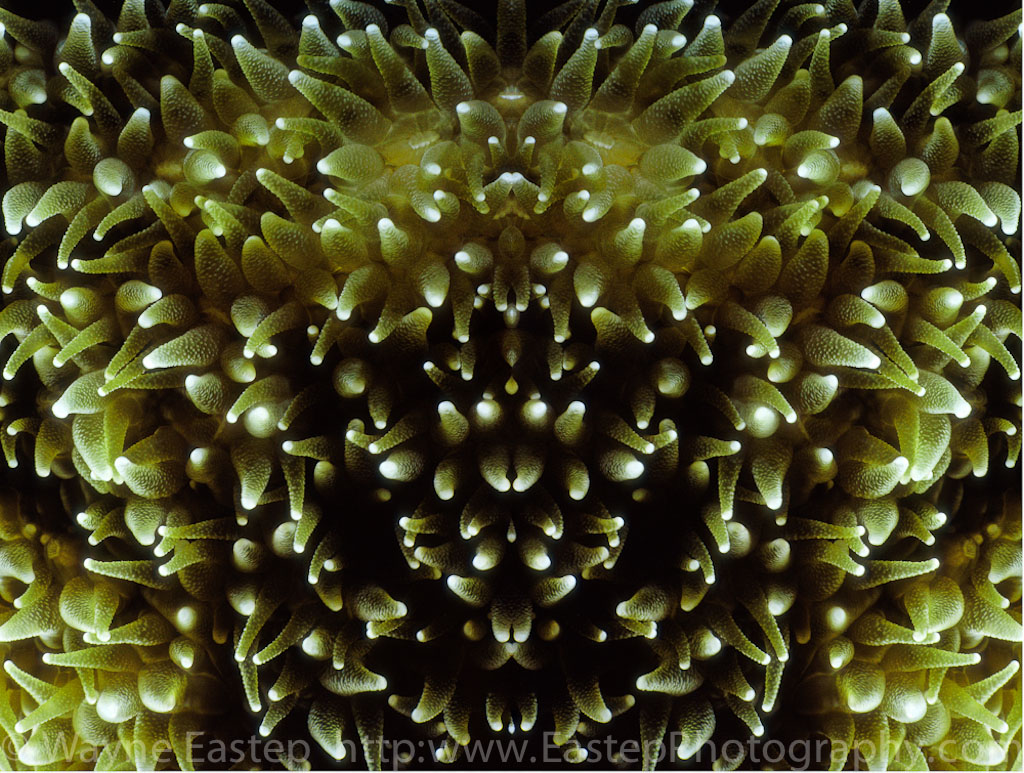
Pillar coral (Dendrogyra cylindrus). Florida Keys
When I first saw pillar coral I was amazed by the sense that light was being emitted from within the undulating tentacles . Coral is one of those phenomenal life forms being both animal and plant.
This image is another example of the beautiful design found in nature.
More underwater images can be seen at my image archive: EastepPhotography.com
Share this:

Nature’s Design
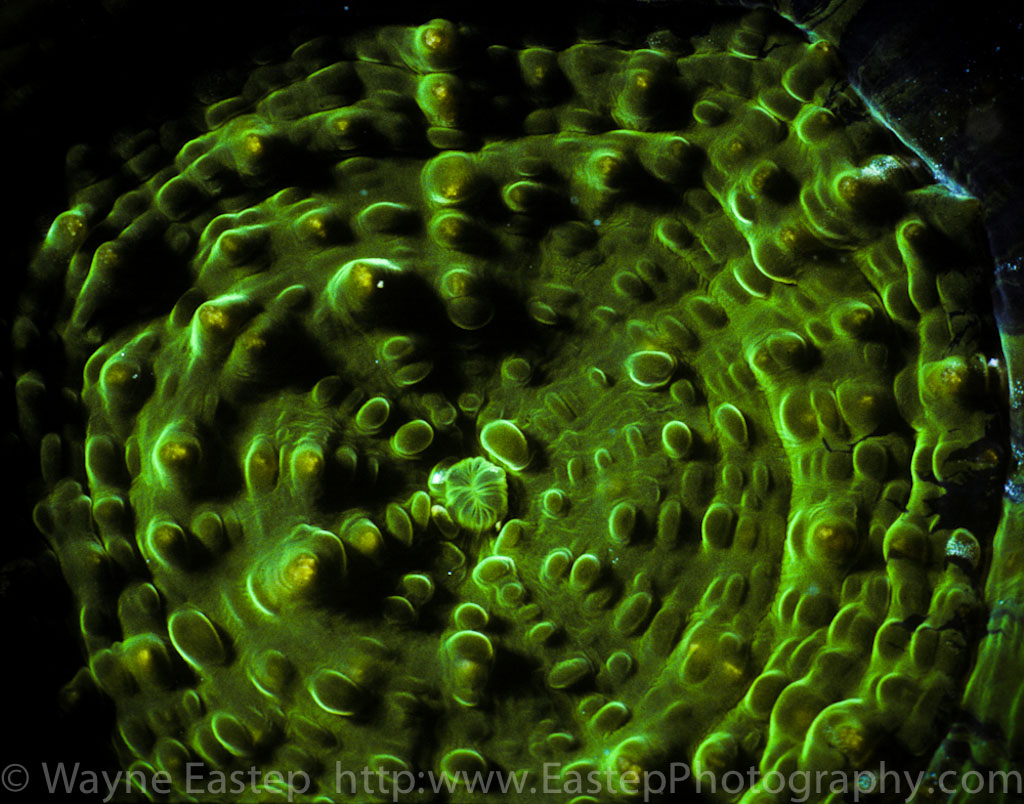
Solitary Disk Coral (Scolymia lacera) Bonaire
Life underwater is a world of dreamlike images. The surprising luminosity, electric color and intriguing shapes are what interest me. Exploring this magical realm is a transcendent experience.
To see more underwater image visit my Image Archive: EastepPhotography.com
Share this:

Moon Jellyfish
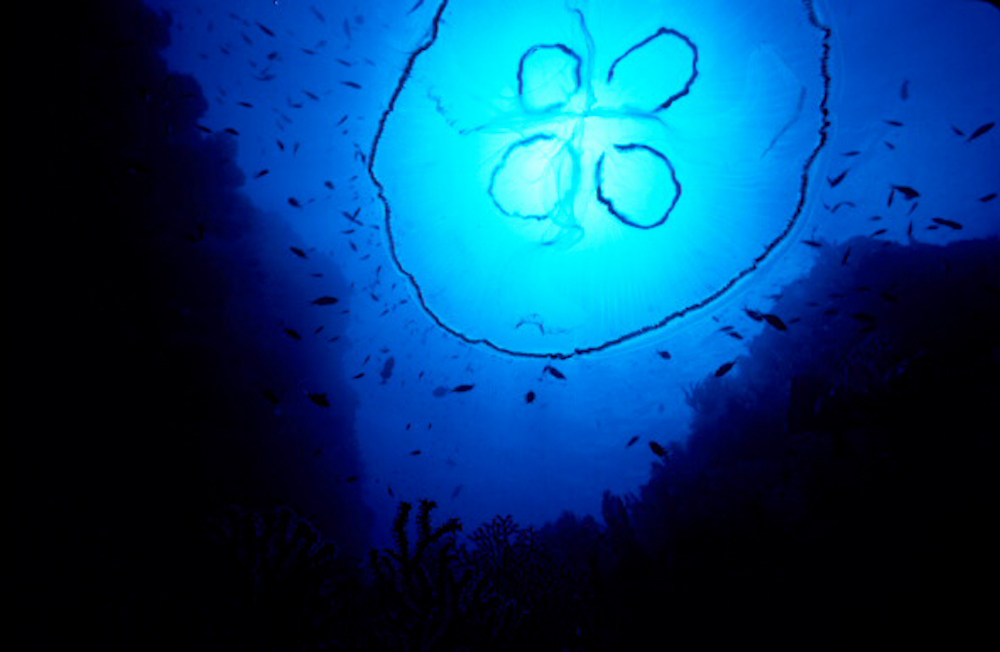
Moon Jellyfish (Aurelia aurita) Saba
When Diana Nyad completed her 110 mile swim from Cuba to Key West on September 2, 2013 it rekindled memories of my encounters with jellyfish in the Caribbean. While photographing underwater for the book The Living Seas I swam into a swarm of jellyfish. I experienced how this magnificent creäture can be threatening.
Jellyfish sting in defense and as a way to attack prey. The tentacles are covered with thousands of cells with stinging threads. These stinging cells shoot out like darts shooting venom with the goal of paralyzing. This action is capable of killing smaller marine creatures. From first hand experience I can tell you that the effect on humans is pain, skin rashes, fever and muscle cramps. Given that I was underwater when stung I did not have close at hand vinegar, rubbing alcohol, meat tenderizer or or baking soda. I did have one of the more effective antidotes, urine. Trust me it works.
In spite of the potential hazard I was drawn back again and again with the goal of creating images which would celebrate the otherworldly beauty of the jellyfish.
I salute Diana Nyad.
To see additional underwater images visit my Image Archive: EastepPhotography.com
Share this:

Color Beyond Description
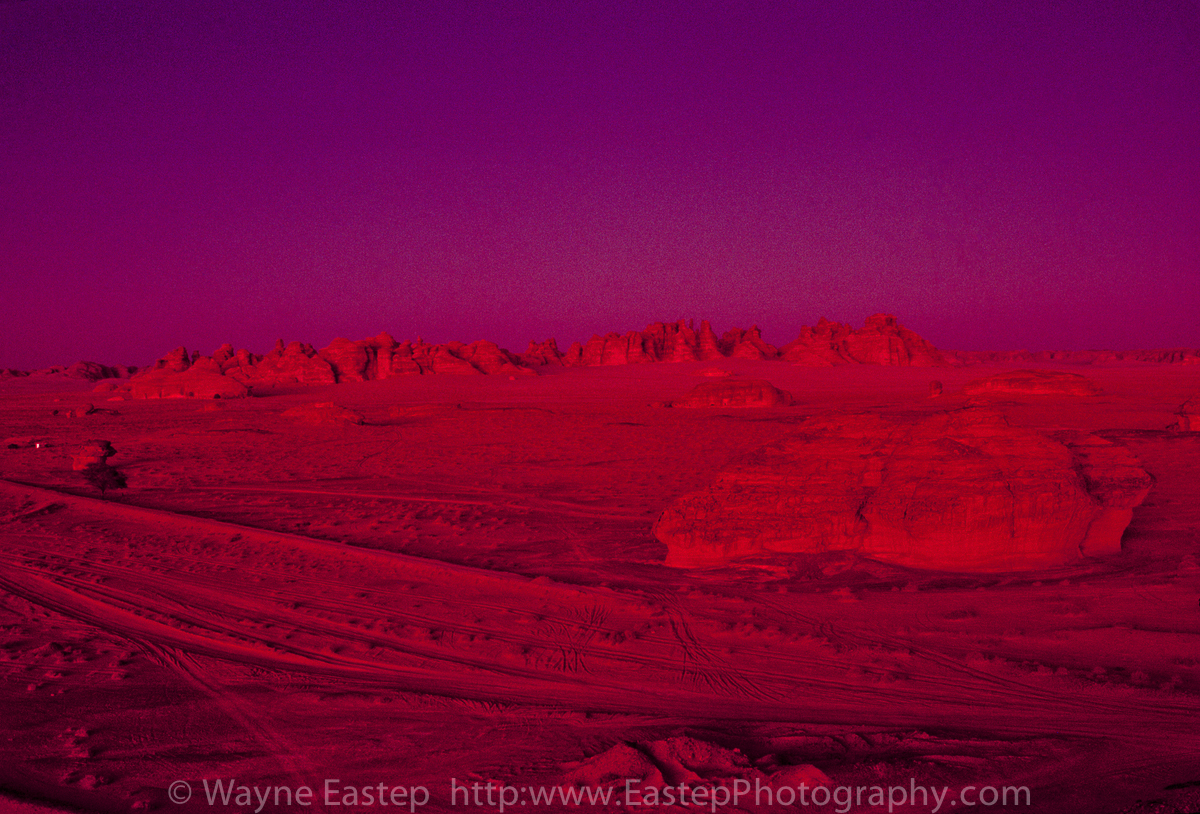
Mada’in Saleh, the historical site of a Nabatean trading center, northern Saudi Arabia
Photography has reached a strange place when I have to explain that “yes, that was the true color” and NO I did not create this in Photoshop, yikes!
The place I made this picture is Mada’in Saleh the historical site of a Nabatean trading center in north-west Saudi Arabia. These folks were part of a group whose capital was Petra in modern-day Jordan. It is also the place the Ottomans had a railroad depot which T.E. Lawrence destroyed. It is now a UNESCO World Heritage Site.
I made this image as part of a feature story of archeology for Smithsonian magazine. There are two reasons the color is other worldly. The first is the light in Arabia gets this way sometimes, that’s all I know. The second reason is I used a rare film Kodachrome Photomicrography which had insane saturation and detail. The ASA is 16. I did not add any color, the film simply recorded everything that was there.
To see more images from this story visit Eastep Image Archive @ www.EastepPhotography.com

 wayne eastep's blog