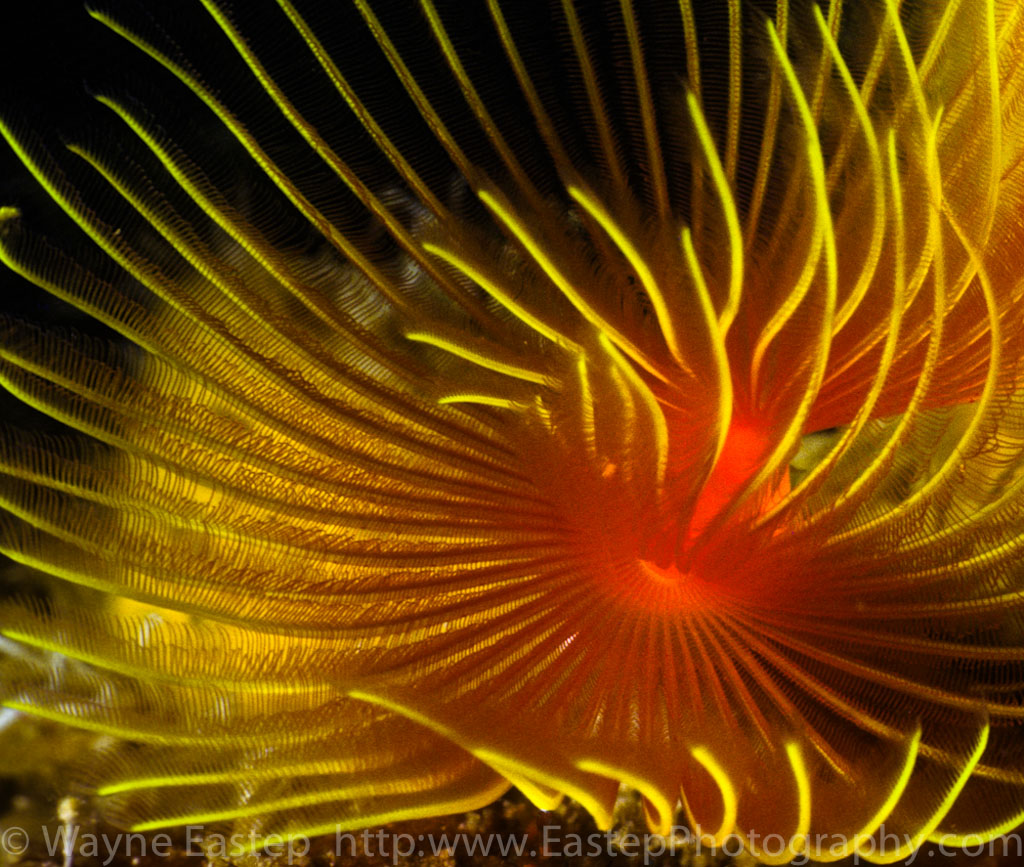
Serpulid Tubeworm (Ponastegus stellatus), Saba
This image of a Tubeworm photographed in Saba is beautiful. Rather than saying more I’ll leave it at that.
To see more of my underwater images visit: EastepPhotography.com
Serpulid Tubeworm (Ponastegus stellatus), Saba
This image of a Tubeworm photographed in Saba is beautiful. Rather than saying more I’ll leave it at that.
To see more of my underwater images visit: EastepPhotography.com
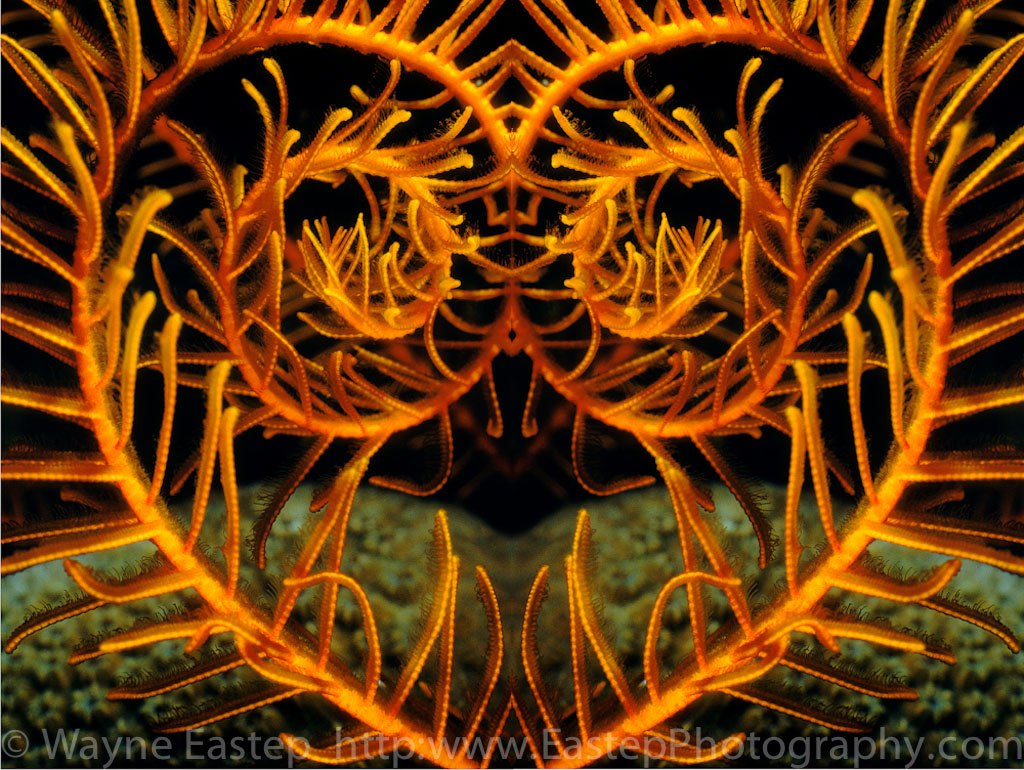
Orange Sea Lily (Nemaster rubiginosa) Bonaire
One of the reasons artists collect so much stuff; rocks, feathers, shells, crushed cans, you name it, is because they have a talent for seeing elements of design in everything. Shapes and forms in the natural world awakens a sensibility that we recognize as having a “sense of rightness,” Mark Getlein, Living With Art.
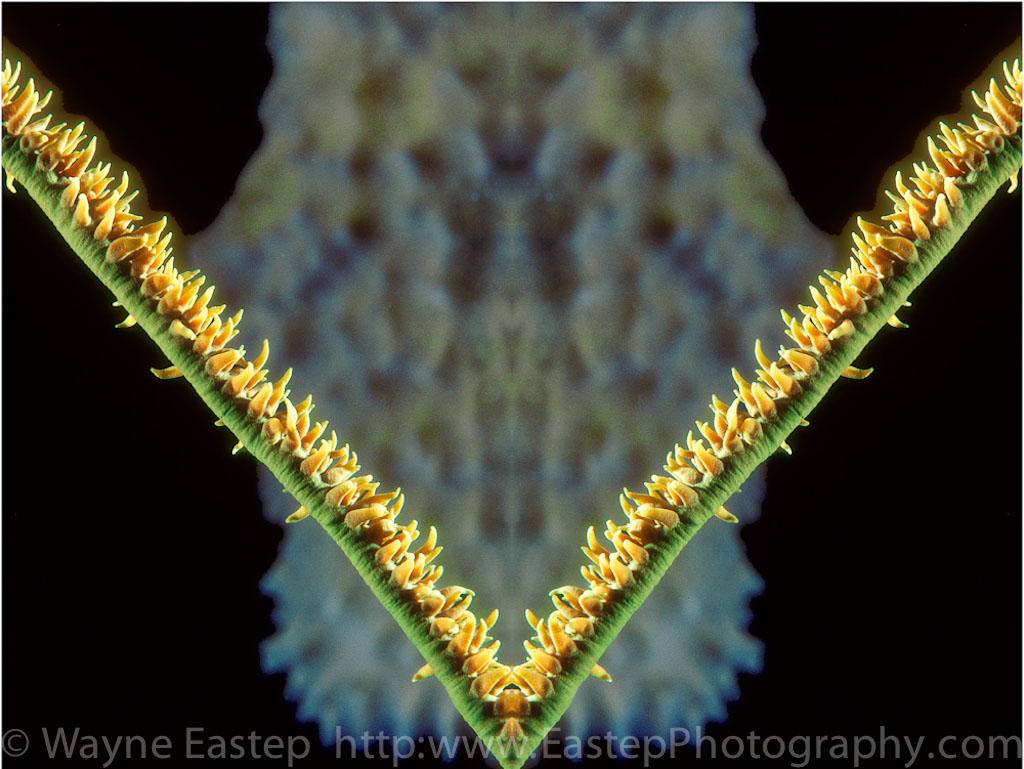
Sea Rod (Gorgonian coral) Bonaire
Focusing on the natural world engages our imagination and inspires a creative response. Design principles from nature show up in science, engineering, architecture, art, textiles and fashion.

Sea Fan Pan (Gorgonia ventalina) Grand Cayman
The approach I took to photographing marine subjects for the book The Living Seas was to concentrate on design within marine life. I looked with curiosity at the line, light, shape and form I saw within the underwater world. Compositions focused on the central design feature of the subject I was studying.
A few years ago a project came along which gave me the opportunity to work with one of the finest designers in America, Chip Reay. Chip selected from my underwater images ones which had clean simple design . He played with the photographs by making a duplicate of the image, flipping it and merging it with the original. the result was a wonderful mirror image, a delightful rorschach. These three images are examples of his successful collaboration with my photographs.
To see more underwater images visit my Image Archive: EastepPhotography.com
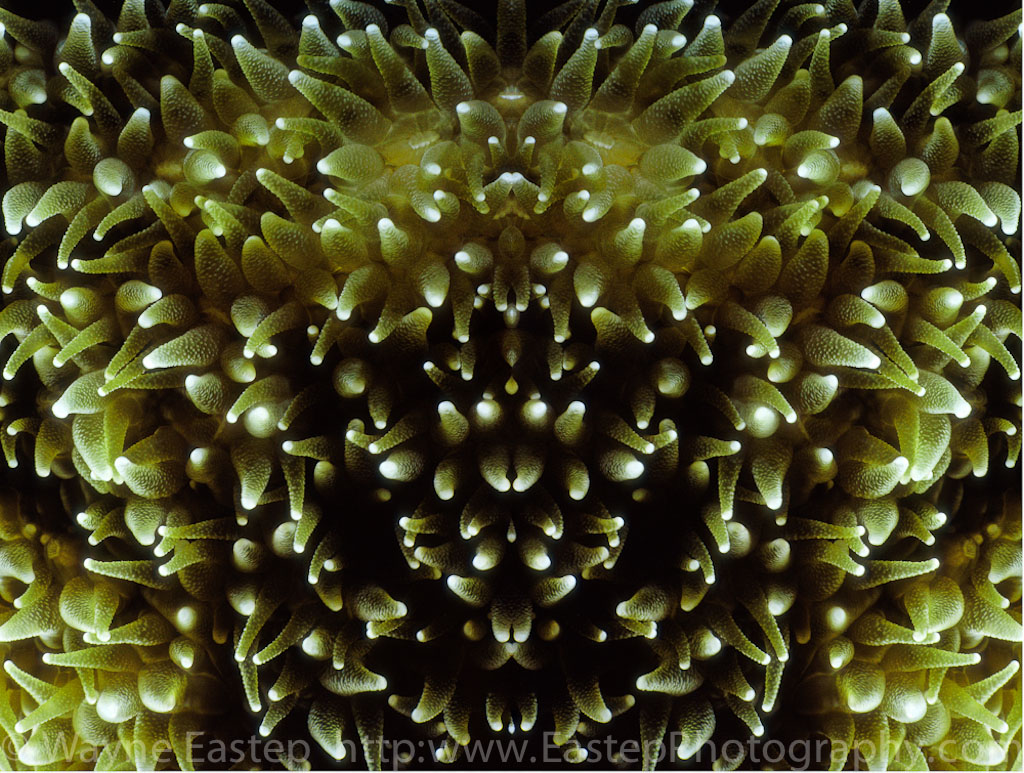
Pillar coral (Dendrogyra cylindrus). Florida Keys
When I first saw pillar coral I was amazed by the sense that light was being emitted from within the undulating tentacles . Coral is one of those phenomenal life forms being both animal and plant.
This image is another example of the beautiful design found in nature.
More underwater images can be seen at my image archive: EastepPhotography.com
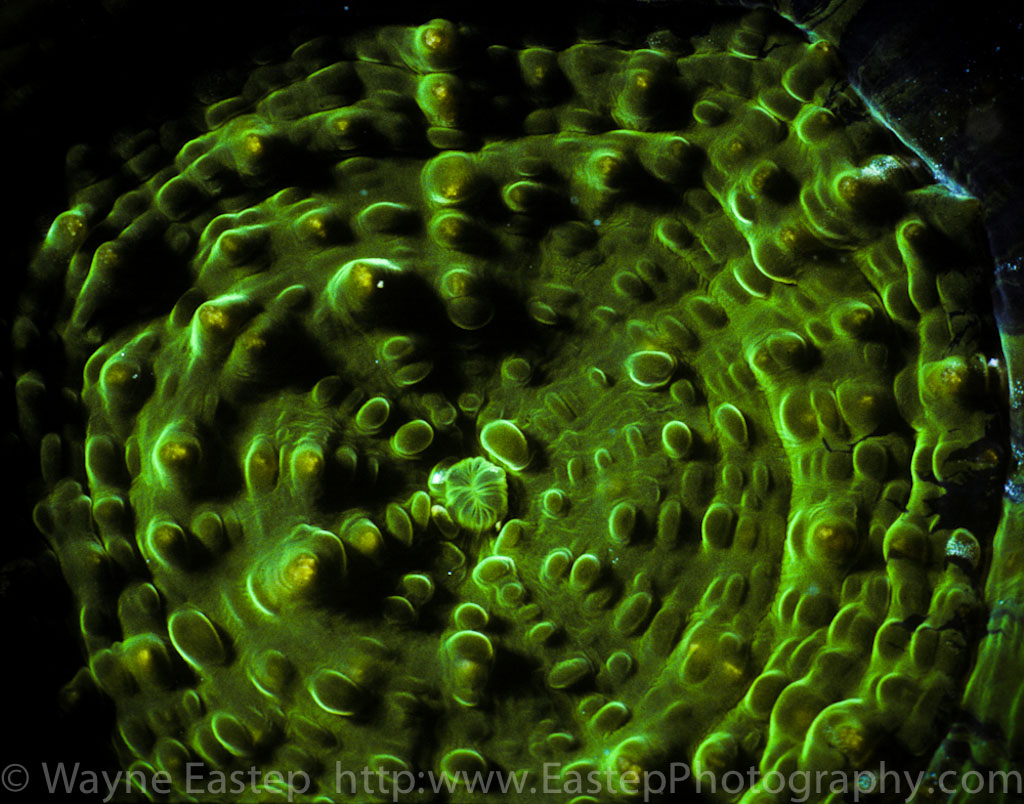
Solitary Disk Coral (Scolymia lacera) Bonaire
Life underwater is a world of dreamlike images. The surprising luminosity, electric color and intriguing shapes are what interest me. Exploring this magical realm is a transcendent experience.
To see more underwater image visit my Image Archive: EastepPhotography.com
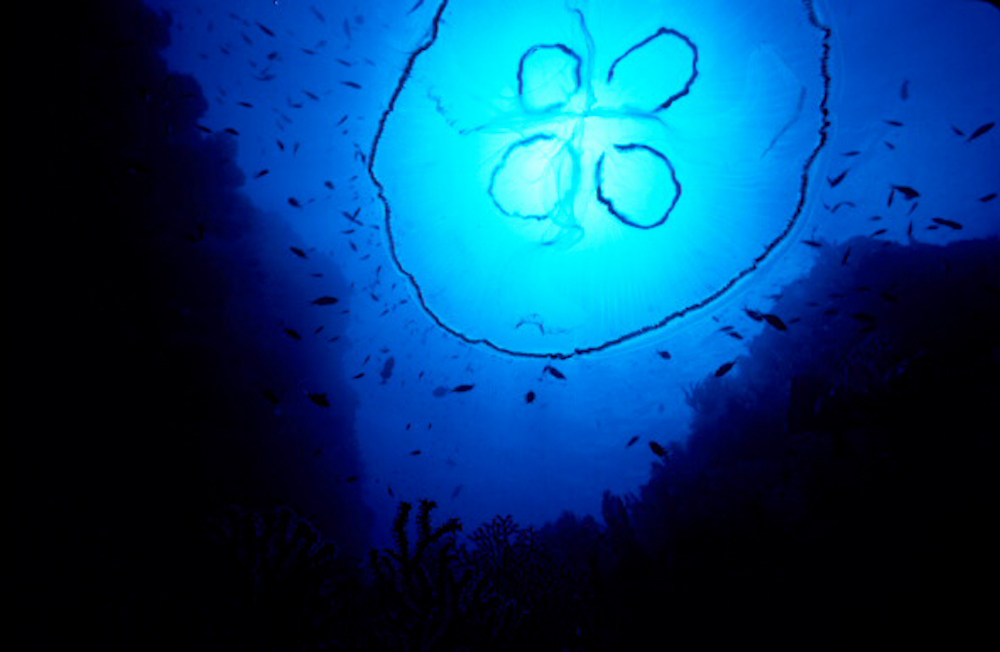
Moon Jellyfish (Aurelia aurita) Saba
When Diana Nyad completed her 110 mile swim from Cuba to Key West on September 2, 2013 it rekindled memories of my encounters with jellyfish in the Caribbean. While photographing underwater for the book The Living Seas I swam into a swarm of jellyfish. I experienced how this magnificent creäture can be threatening.
Jellyfish sting in defense and as a way to attack prey. The tentacles are covered with thousands of cells with stinging threads. These stinging cells shoot out like darts shooting venom with the goal of paralyzing. This action is capable of killing smaller marine creatures. From first hand experience I can tell you that the effect on humans is pain, skin rashes, fever and muscle cramps. Given that I was underwater when stung I did not have close at hand vinegar, rubbing alcohol, meat tenderizer or or baking soda. I did have one of the more effective antidotes, urine. Trust me it works.
In spite of the potential hazard I was drawn back again and again with the goal of creating images which would celebrate the otherworldly beauty of the jellyfish.
I salute Diana Nyad.
To see additional underwater images visit my Image Archive: EastepPhotography.com
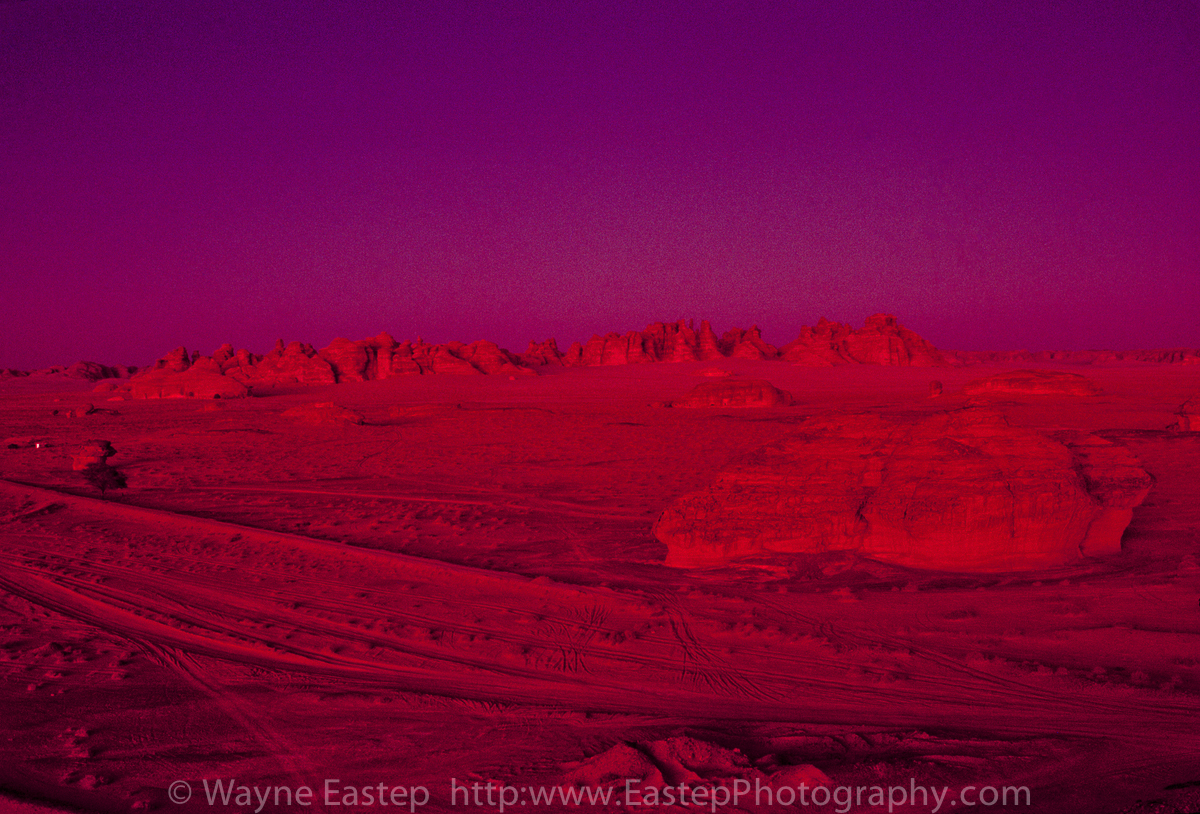
Mada’in Saleh, the historical site of a Nabatean trading center, northern Saudi Arabia
Photography has reached a strange place when I have to explain that “yes, that was the true color” and NO I did not create this in Photoshop, yikes!
The place I made this picture is Mada’in Saleh the historical site of a Nabatean trading center in north-west Saudi Arabia. These folks were part of a group whose capital was Petra in modern-day Jordan. It is also the place the Ottomans had a railroad depot which T.E. Lawrence destroyed. It is now a UNESCO World Heritage Site.
I made this image as part of a feature story of archeology for Smithsonian magazine. There are two reasons the color is other worldly. The first is the light in Arabia gets this way sometimes, that’s all I know. The second reason is I used a rare film Kodachrome Photomicrography which had insane saturation and detail. The ASA is 16. I did not add any color, the film simply recorded everything that was there.
To see more images from this story visit Eastep Image Archive @ www.EastepPhotography.com
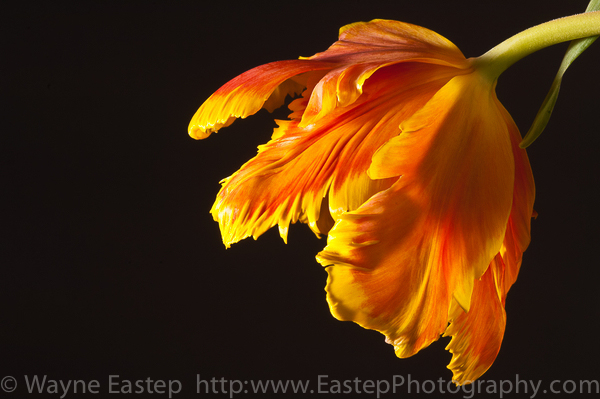
Professor Rontgen Parrot Tulip
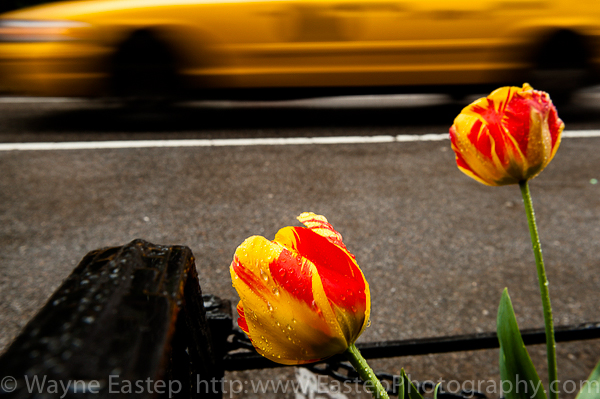
Parrot Tulips on 29th Street, New York City
I’ve had a forty-year love affair with the parrot tulip. There are a few moments when I meet someone or discover something in nature when a connection is established that lasts a lifetime. I’ve been blessed with a few of these moments, the first time I saw Patti’s eyes, she’s been my wife for 45 years. The moment I looked into Layla’s face in the delivery room, 26 years later I am still in love with my daughter. Then there’s the parrot tulip.
The first time I saw a parrot tulip was forty years ago while walking in the rain along Madison Avenue in New York City. A corner flower shop had a funnel-shaped galvanized bucket full of parrot tulips among the flowers on display. Even now I remember the response I had, it was mainly wonderment. Looking at the tulip was like looking at a flame painted into a flower.
A few years ago I had a florist importer order direct from Holland two dozen parrot tulips. They were delivered every Monday during their blooming period. I would take them into my studio, study them and make new visual discoveries each week. The first image with the black background is an image from one of those sessions.
Earlier this year while walking in the rain along 29th street near my apartment in New York City I came upon two parrot tulips. There were growing within a metal enclosure around a Ginko tree. I got down low to take a closer look when I noticed the taxis heading westbound on 29th street. The image of that moment is the second one in this post.
To see more images visit: Eastep Image Archive
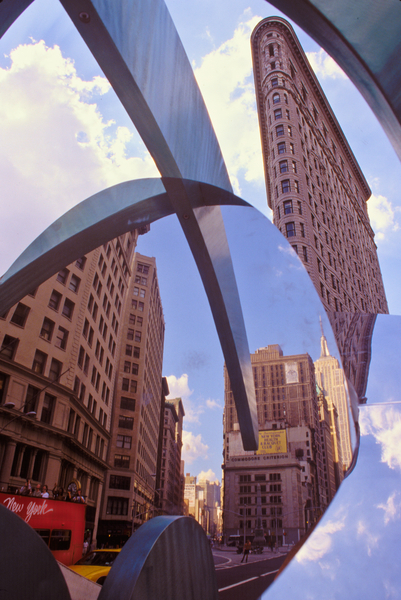
Reflection of the Flatiron Building from mirror sculpture at 23rd St. and Fifth Avenue, New York City
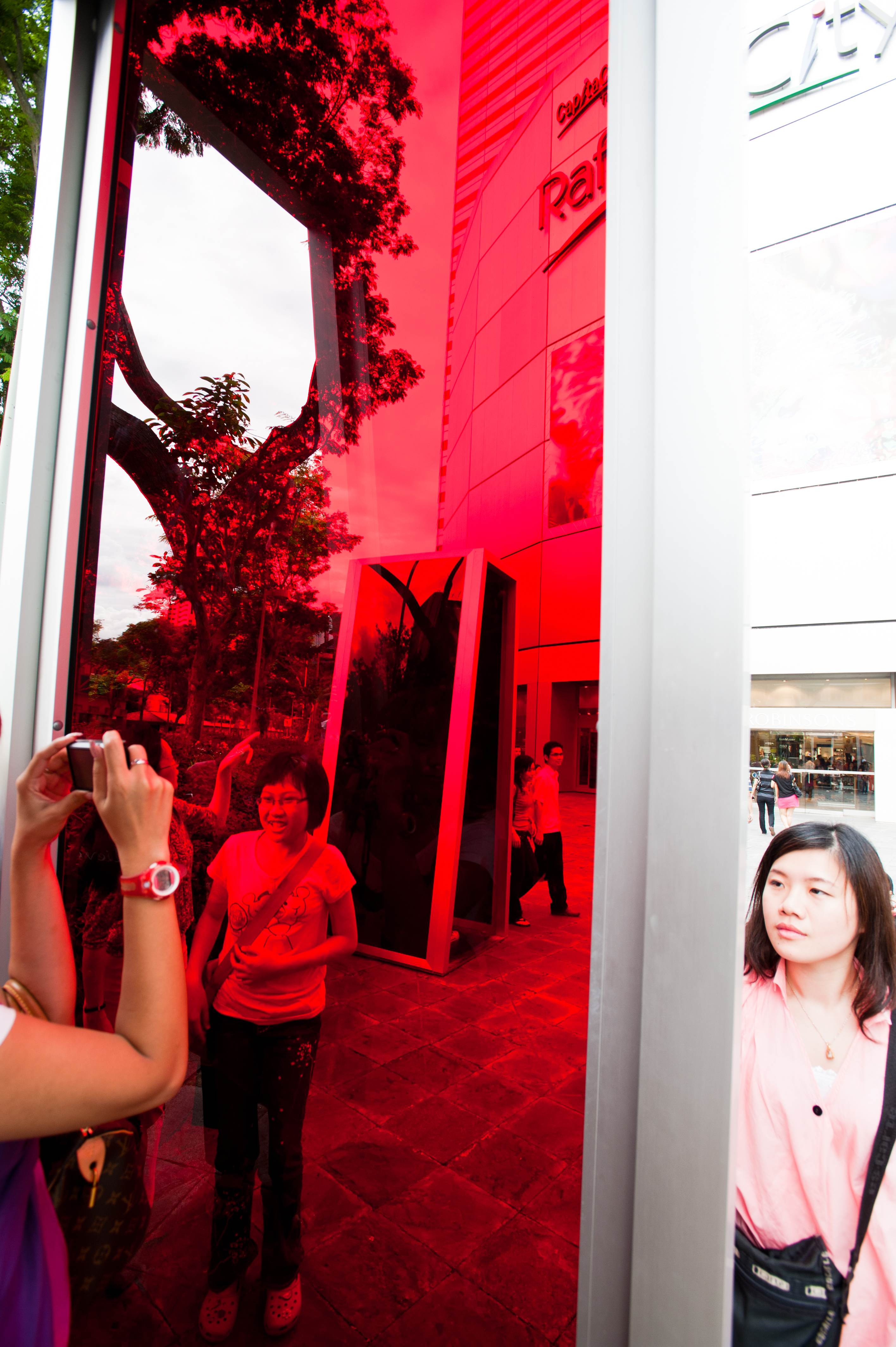
Art in public space Singapore
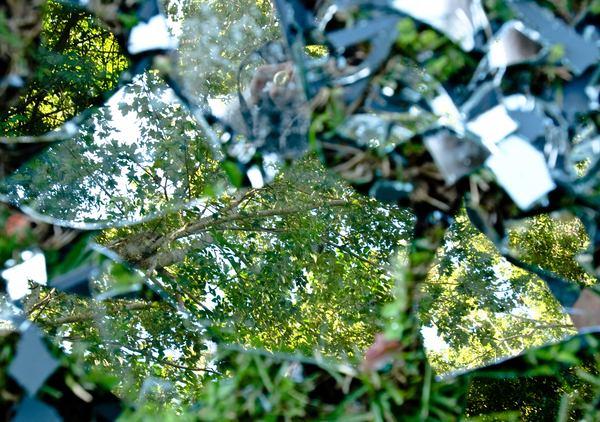
Broken mirror in the woods, Sarasota, Florida
When I think about how we see, I sense that we look optically with our eyes and we perceive with our minds eye. The amount of information we see at one time is enormous. Our minds eye selects, filters, organizes, categorizes, defines, and correlates what we see, then creates meaning by integrating with our consciousness. Did I mention this is done in a micro second?
Art can frame and re-frame the physical world and help us see and think about what we often take for granted. It presents an opportunity to expand our perception and enter a state of observation and hopefully, awareness.
These three images that did that for me. The broken mirror reflecting the surrounding woods was alongside the road. The women in Singapore were having fun with a freestanding set of translucent and mirrored panels and the sculpture near Madison Square park in New York created segmented and reflected views of the iconic Flatiron building, the Empire State building and a tour bus along Fifth Avenue.
These images posit the question, what is consciousness? They even challenge our assumption of what reality is. Is it what’s in front of us, behind us, what we see within one plane or what we saw just before we became aware of what we are now seeing? More often than not, the role of art is to raise the question rather than propose the answer.
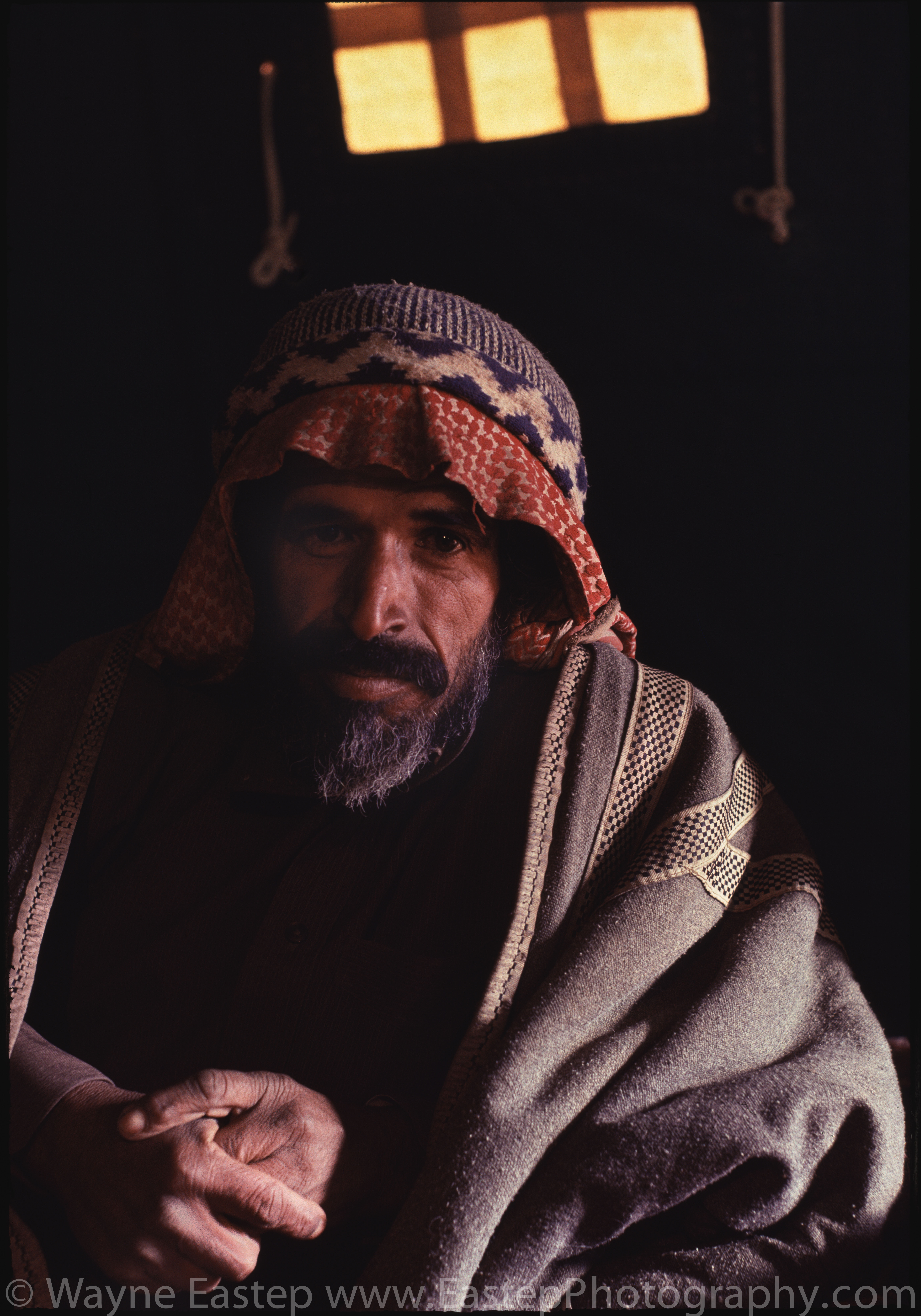
Murie bin Mohammed Al Murrah brought us a bag of truffles from the Empty Quarter. Dahana Sands, Saudi Arabia.
The Bedouin of Saudi Arabia are one of the world’s most unique nomadic people. They survive in the Arabian deserts under some of the harshest conditions in nature.
The Al Murrah Bedouin tribe attracted my attention because they have lived as nomads in Arabia with an unbroken bloodline for 5,000 years +. I figured such unique people would have important insights into human relationships. I was right.
Leading Saudi families in government, business, judicial and academic communities have sent their young children to live among the Bedouin for similar reasons. King ‘Abd al-‘Aziz ibn Sa’ud, the monarch who unified the Arabian tribes and created the modern Kingdom of Saudi Arabia, spent time with the Al-Murrah in the southern deserts of Saudi Arabia.
When I began my documentary photography career I decided to study the Bedouin in Arabia, specifically the Al Murrah tribe. This modest collection of images is from a library of over 25,000 images. They are the subject of the book BEDOUIN which won the Pershke Price “Best Book” award and Gold Prize for the “Best of All Things in Print”.
To see more images of the Bedouin visit EastepPhotography.com
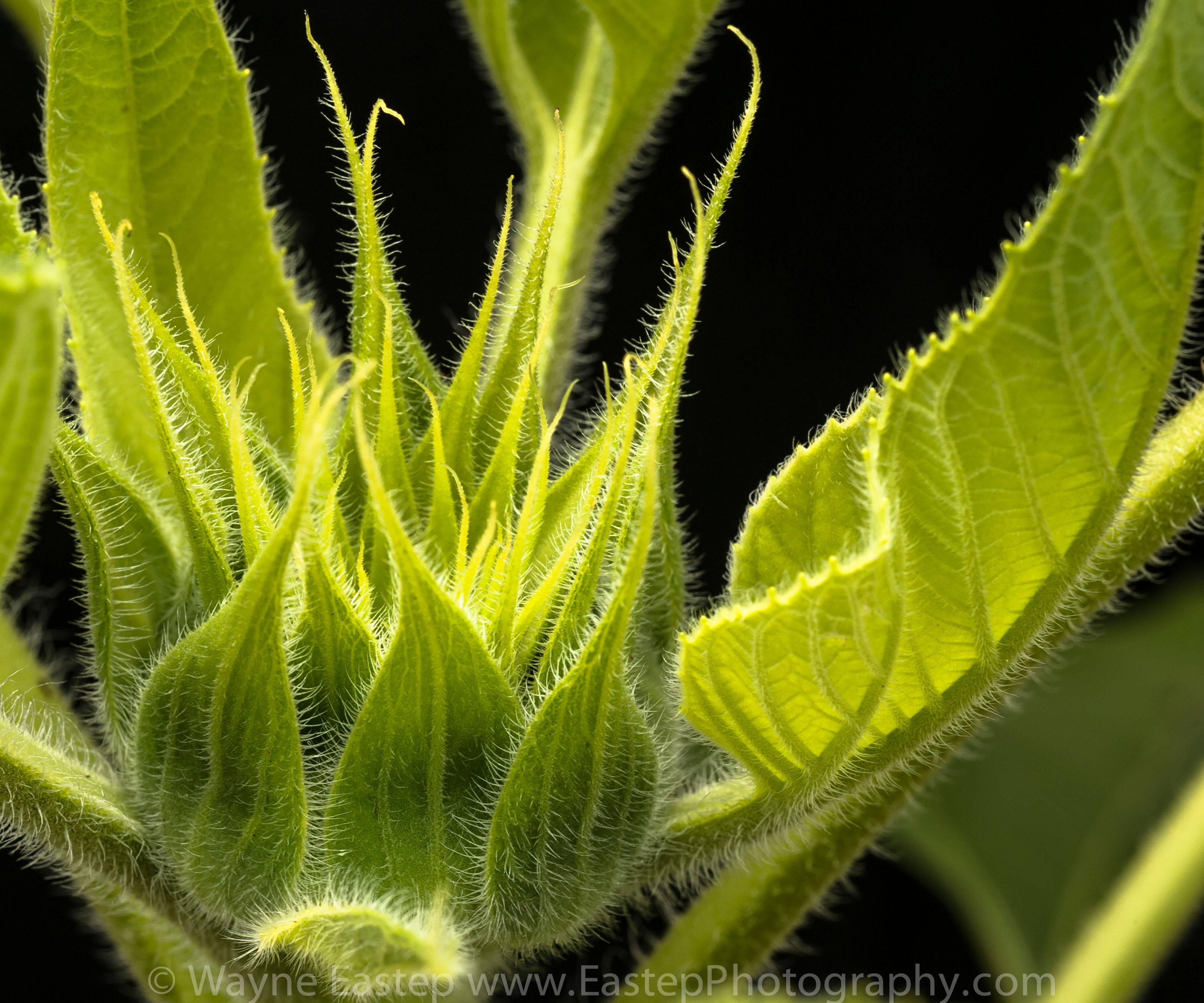 Sunflower plant forming a flower bud.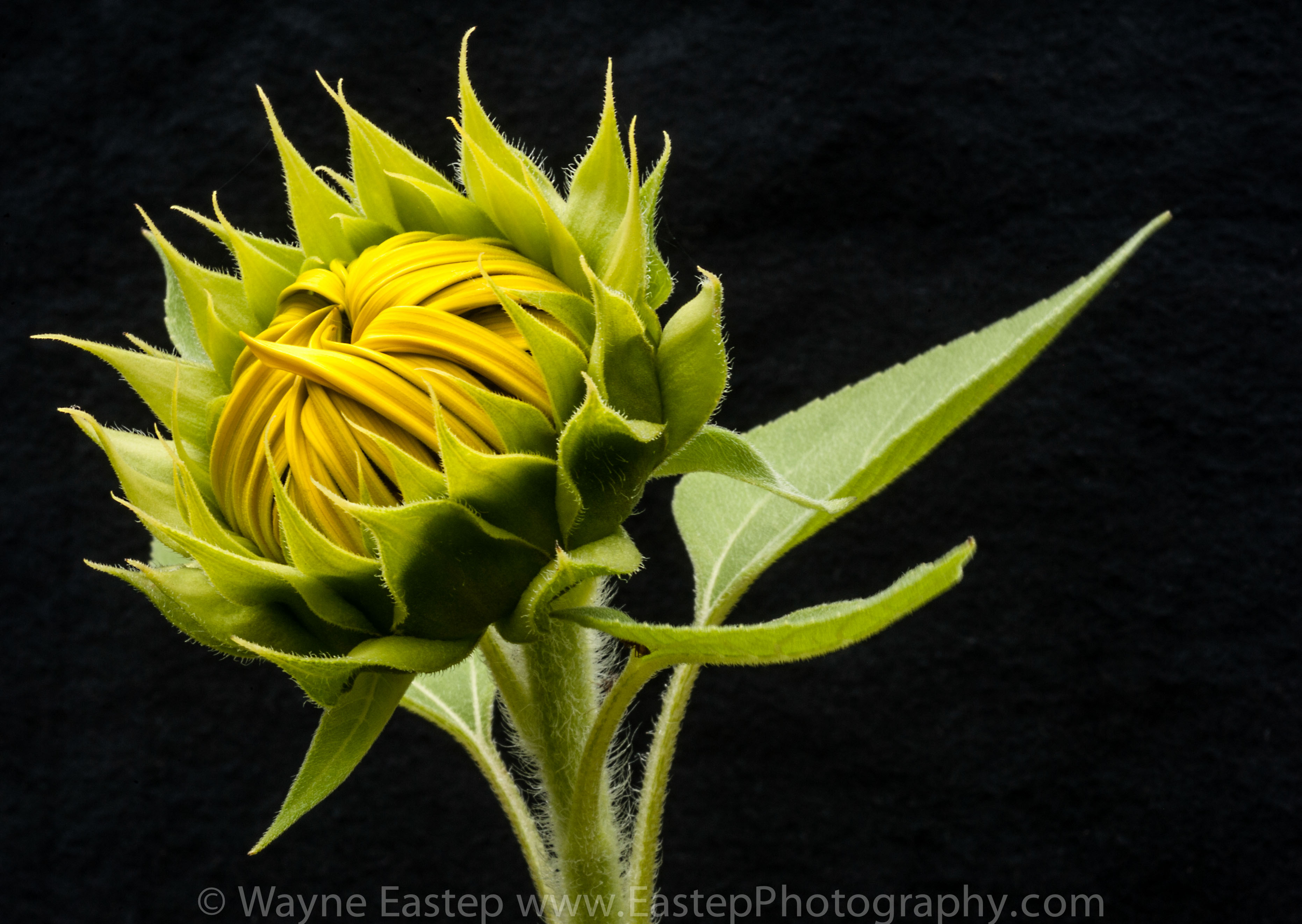
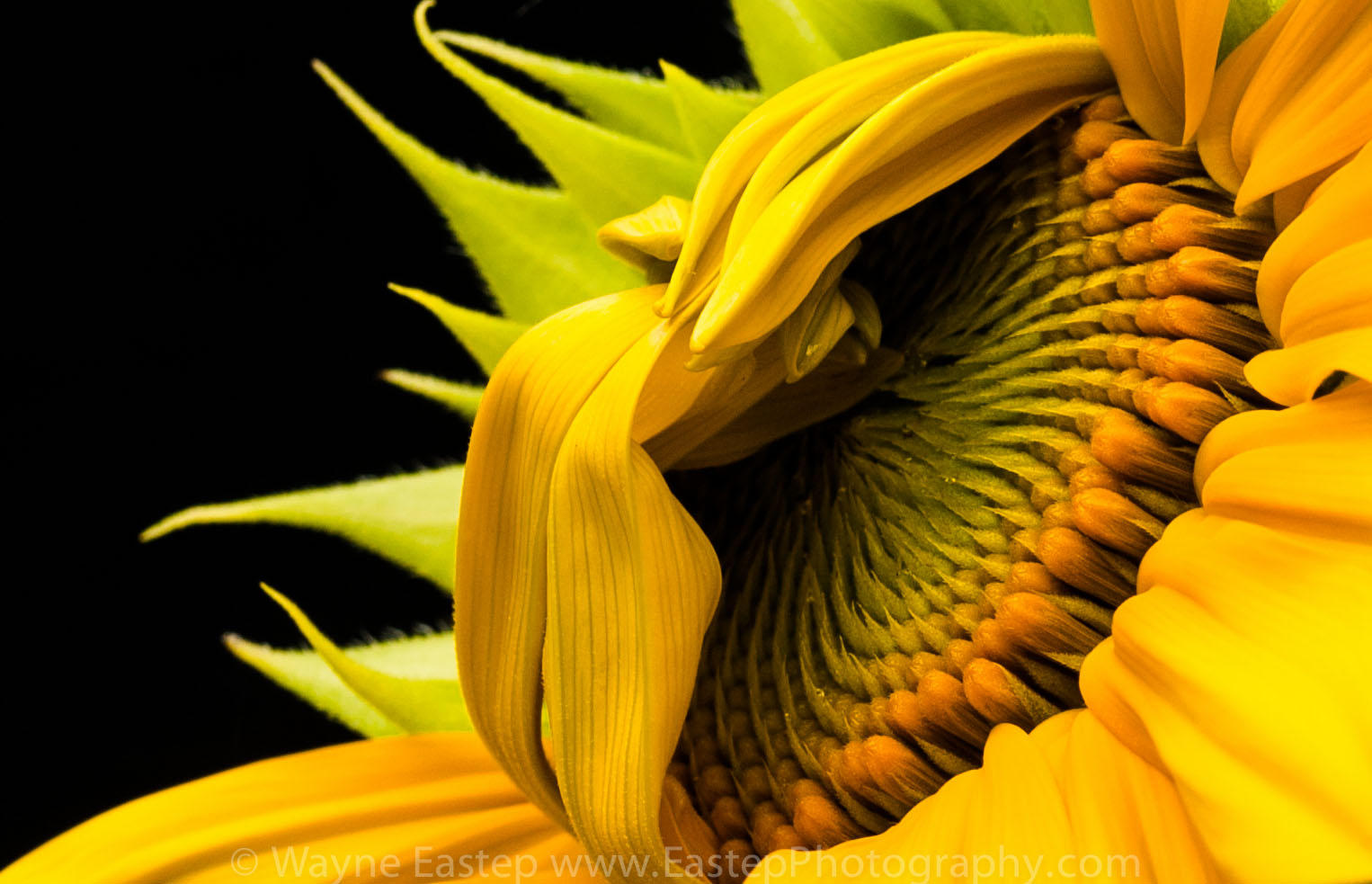 The nexus between art and science intrigues me. The more I look, study and reflect on the design within nature the more I appreciate the relationship between science and art. The elegant design of the sunflower is a good example of this relationship. There is something in the design of a sunflower that informs our perception and moves us to call it beautiful. When we study the structure of the sunflower we discover that the beauty is a combination of art and science.
The flower petals within the sunflower’s cluster are always in a spiral pattern. Generally, each floret is oriented toward the next by approximately the golden angle, 137.5 degrees, producing a pattern of interconnecting spirals, where the number of left spirals and the number of right spirals are successive Fibonacci numbers. This pattern produces the most efficient packing of seeds within the flower head.
This past spring I planted sunflowers seeds then watched and photographed them from seedlings to mature plants. These images were made from those plants. To see additional images of the sunflowers I grew visit my image archive; EastepPhotography.com


 wayne eastep's blog