Sunflower | Golden Ratio, Golden Bloom
Series: Floral Essence #2 Sunflower
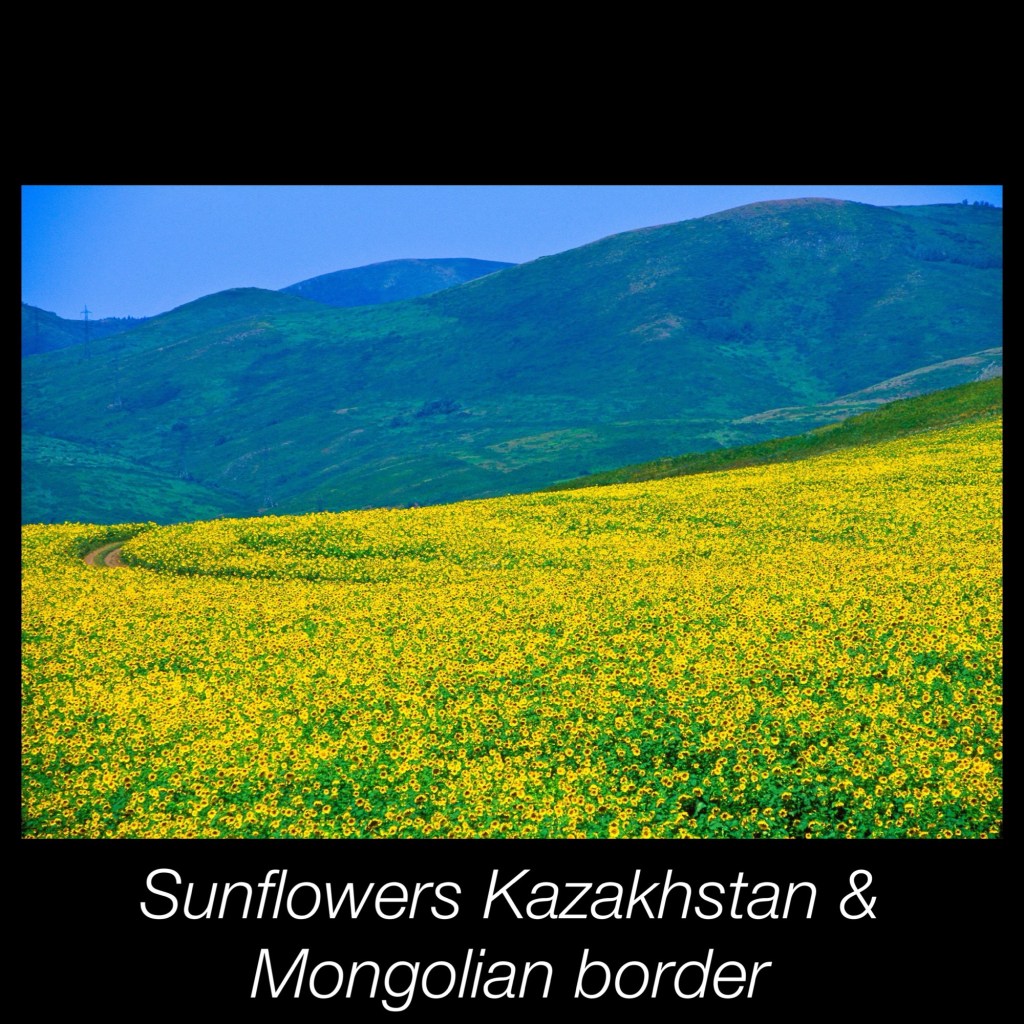
As we were driving along the border of Kazakhstan toward Mongolia, we crested a hill. The field in front of us, all the way to the horizon, was filled with sunflowers as far as the eye could see. I had our fixer pull over. I got out of the jeep, went into the field, and made a series of images of the golden carpet of sunflowers in full bloom. It knocked me out!
Over the next couple of years, the magnificence of those sunflowers remained alive in my memory.
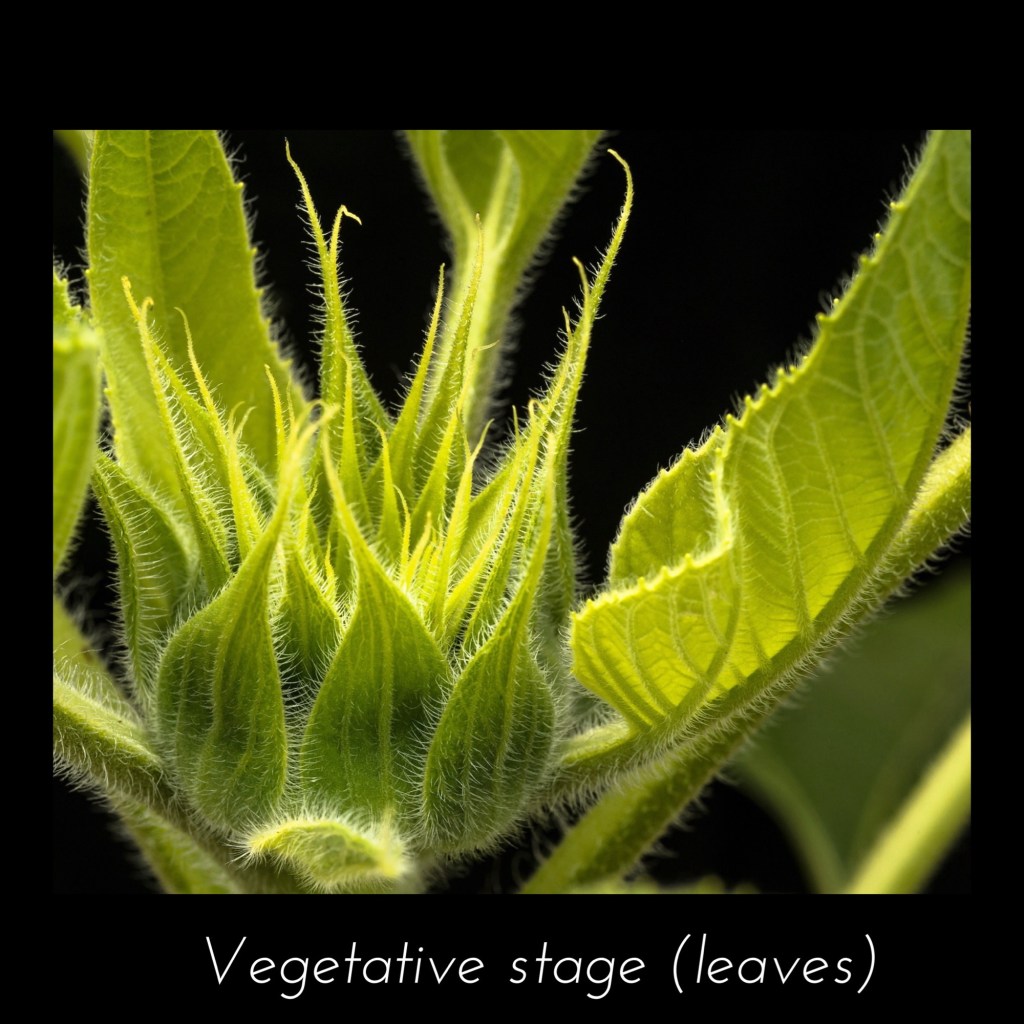
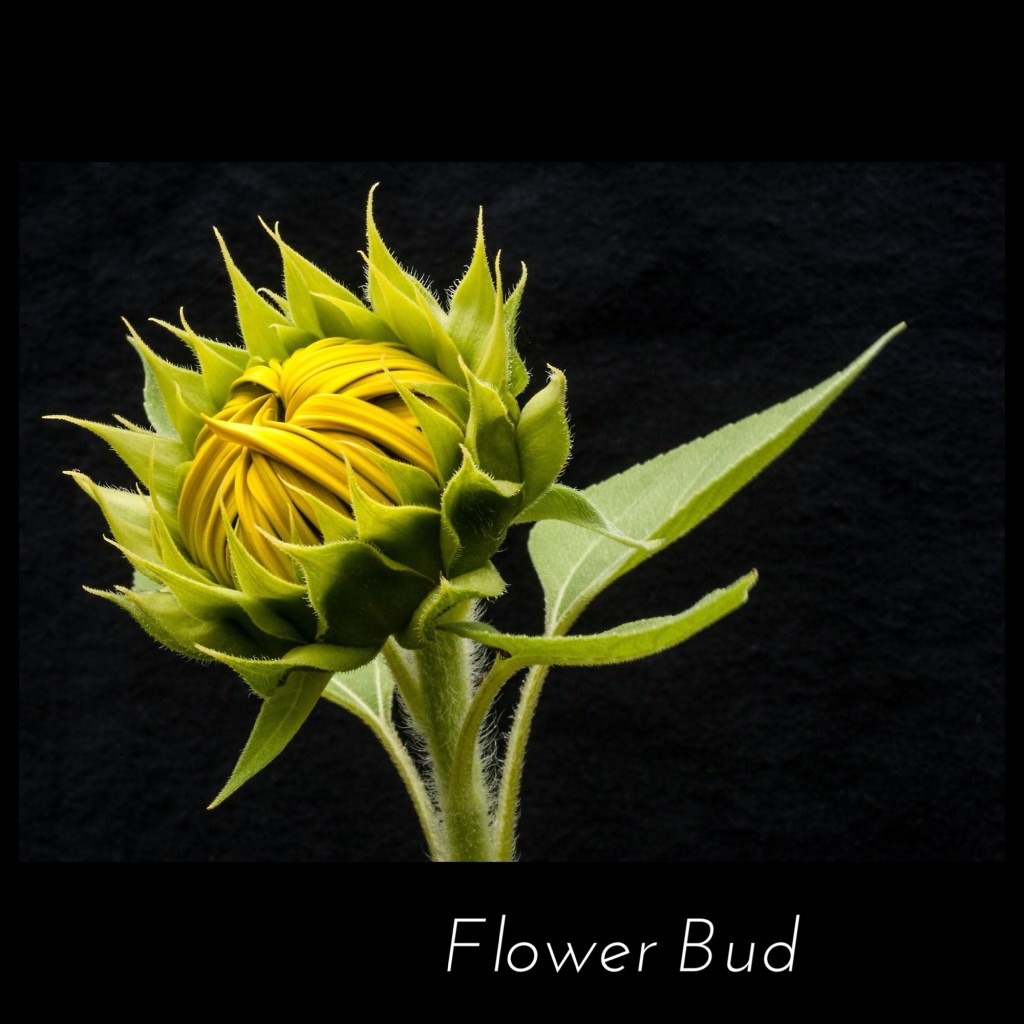
I wanted to learn more about sunflowers. My curiosity was not just about the beauty of their bright blossoms, but what they were all about. I ordered mammoth sunflower seeds, planted the seeds in a circle in my yard, waited, and watched. Over three months, I photographed the stages of growth from seedlings to decline. What I observed increased my appreciation for their beauty but raised even more questions.
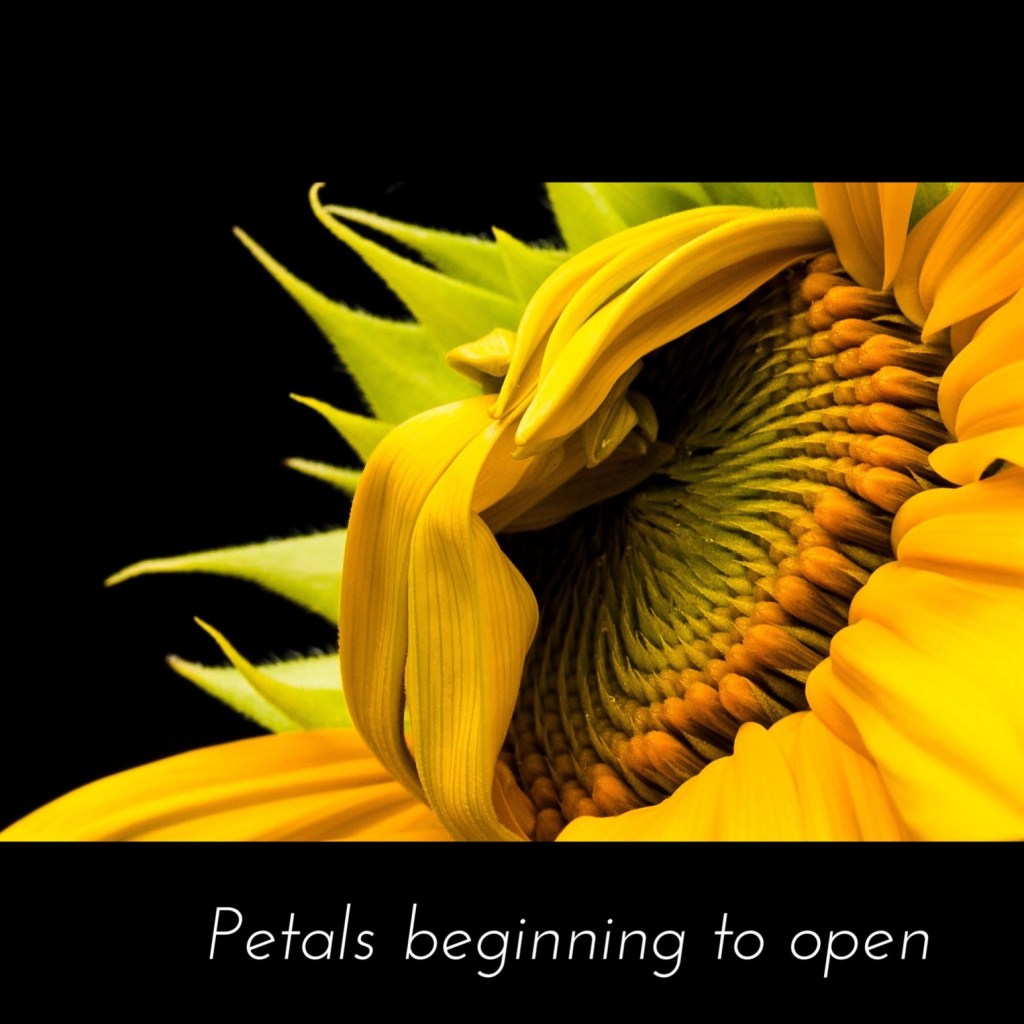
Why did every flower develop a similar spiral pattern? Why were the seeds packed in so tightly and at an angle? My research revealed many connections between nature, mathematics, philosophy, and the rich history of intellectual inquiry — more on that in a later post.

The short-form answer to my questions is that the spiral pattern and the angle of the seeds in the sunflower represent the most efficient way to pack seeds in space and ensure reproductive success. The spirals are called “golden spirals,” reflecting Fibonacci numbers. The elegant angle of the seeds to each other aligns with the “golden angle’’. The pattern of the seeds in the sunflower represents what, in mathematics and aesthetics, can be called beauty — more on that in a future post. Leonardo Da Vinci described this phenomenon, which can also be seen in hurricanes, galaxies, pinecones, and pineapples, as the “Divine Proportions”.
One day, when the flowers were reaching maturity, I watched a pair of wild Brazilian Green Parrots as they fed on the seeds. The two parrots took up positions next to each other on two sunflowers. While one ate, the other stood guard, watching for any threat. After a while, they switched roles. The one guarding then ate, and the other provided protection.

 wayne eastep's blog
Beautiful and amazing series, Wayne. Perfection on detail. I turned 83 in June — how the hell did that happen!? I’m keepin’ on keepin’ on. Just got back from two weeks in southern France and Paris with Steve. Wonderful trip, and knees and back pretty much kept up with the pace. I’m not driving at night or long distances anymore. Macular degeneration has progressed despite injections in both eyes. I’m returning to Florida the first week in November and would love to manage a get-together in Cape Canaveral; or Steve and I are also contemplating a visit to a friend of his in Sarasota and perhaps we could manage lunch or dinner then. I hope you are doing well, and Patti, too, of course. Drop me a line with an update when you can. For now, love to both, Gary
LikeLike
Beautiful work, Wayne.
I guessed the black cloth but I can’t guess the lighting.
Do tell.
All my best, Thomas
LikeLike
Really beautiful images. I remember from your class that you said you keep a piece of black felt with you to put behind a subject like a flower to make a more dramatic image. Wow! It really shows in these images. I didn’t know about the spiraling. Really interesting.
LikeLike
Thank you Tim. I agree this is a good example of using a black cloth to create a clean background. Additionally when black is put next to a color it helps the color to pop
The Shape of the Wind *Fine Art Photography | Wayne Eastep https://tinyurl.com/3y8hctde *
LikeLike