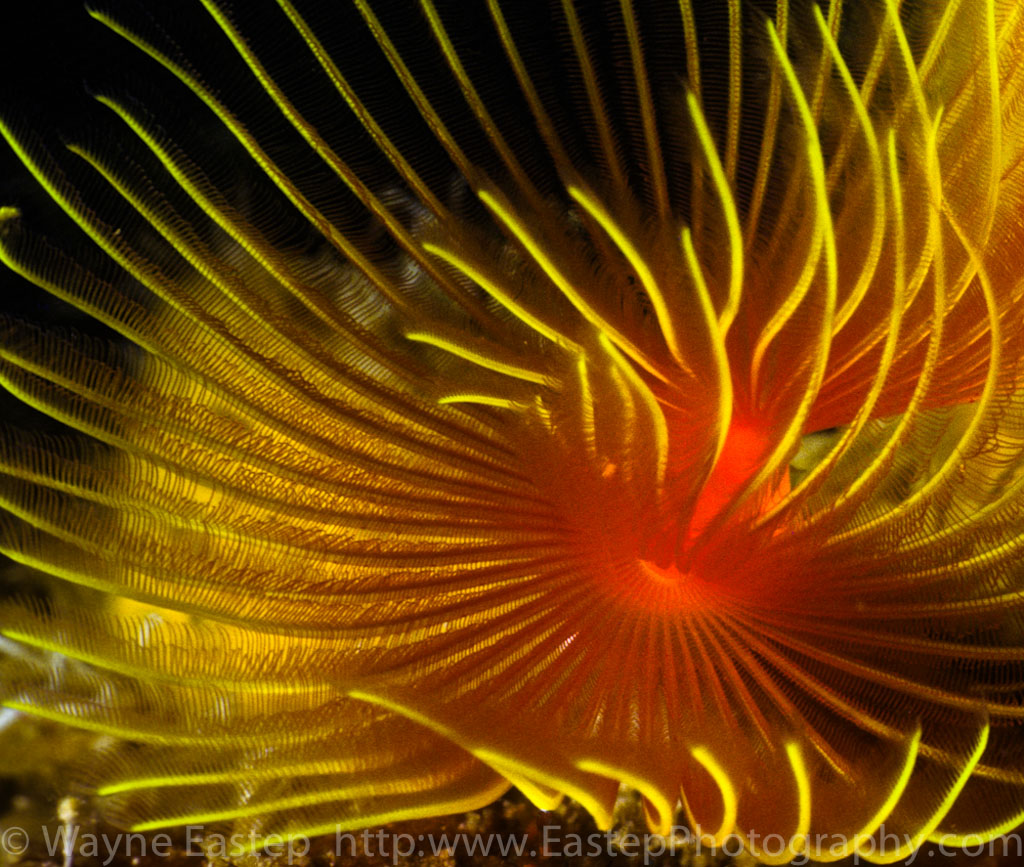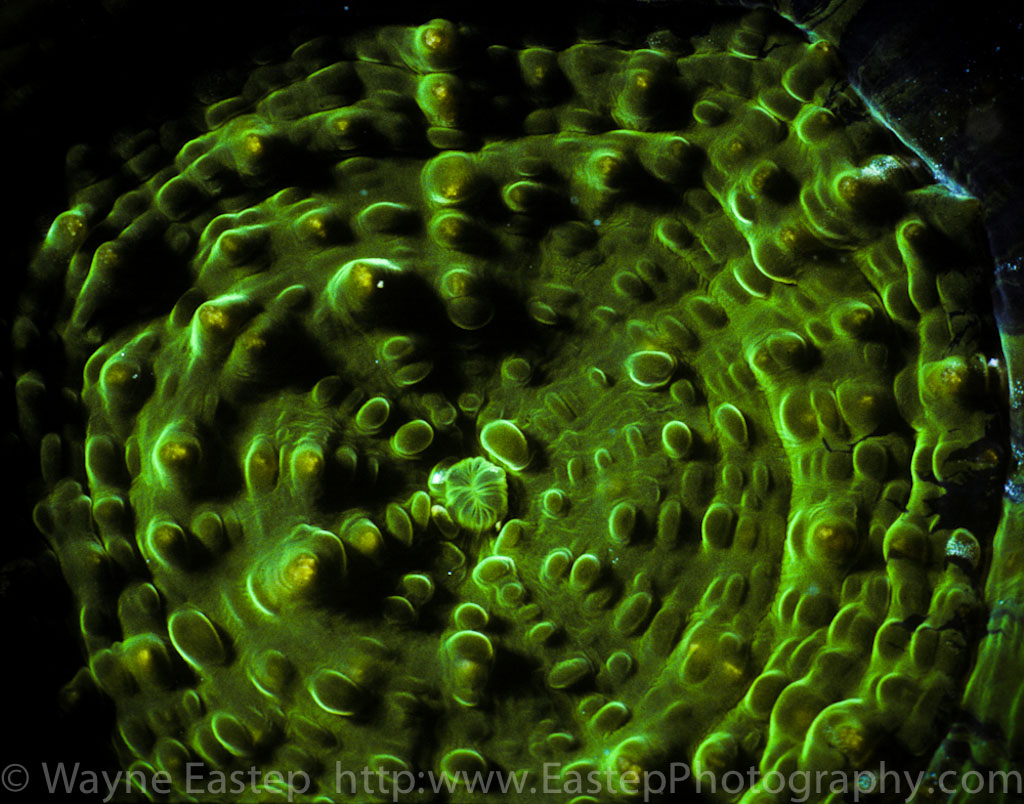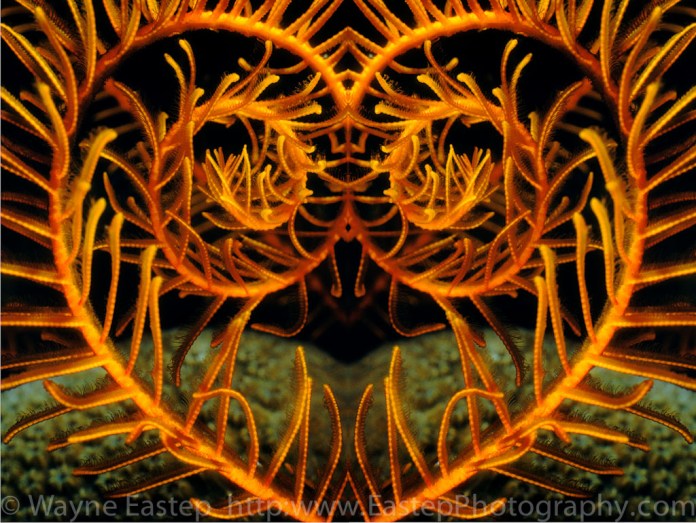
This image of a Tubeworm photographed in Saba is beautiful. Rather than saying more I’ll leave it at that.
To see more of my underwater images visit: EastepPhotography.com
This image of a Tubeworm photographed in Saba is beautiful. Rather than saying more I’ll leave it at that.
To see more of my underwater images visit: EastepPhotography.com
One of the reasons artists collect so much stuff; rocks, feathers, shells, crushed cans, you name it, is because they have a talent for seeing elements of design in everything. Shapes and forms in the natural world awakens a sensibility that we recognize as having a “sense of rightness,” Mark Getlein, Living With Art.
Focusing on the natural world engages our imagination and inspires a creative response. Design principles from nature show up in science, engineering, architecture, art, textiles and fashion.
The approach I took to photographing marine subjects for the book The Living Seas was to concentrate on design within marine life. I looked with curiosity at the line, light, shape and form I saw within the underwater world. Compositions focused on the central design feature of the subject I was studying.
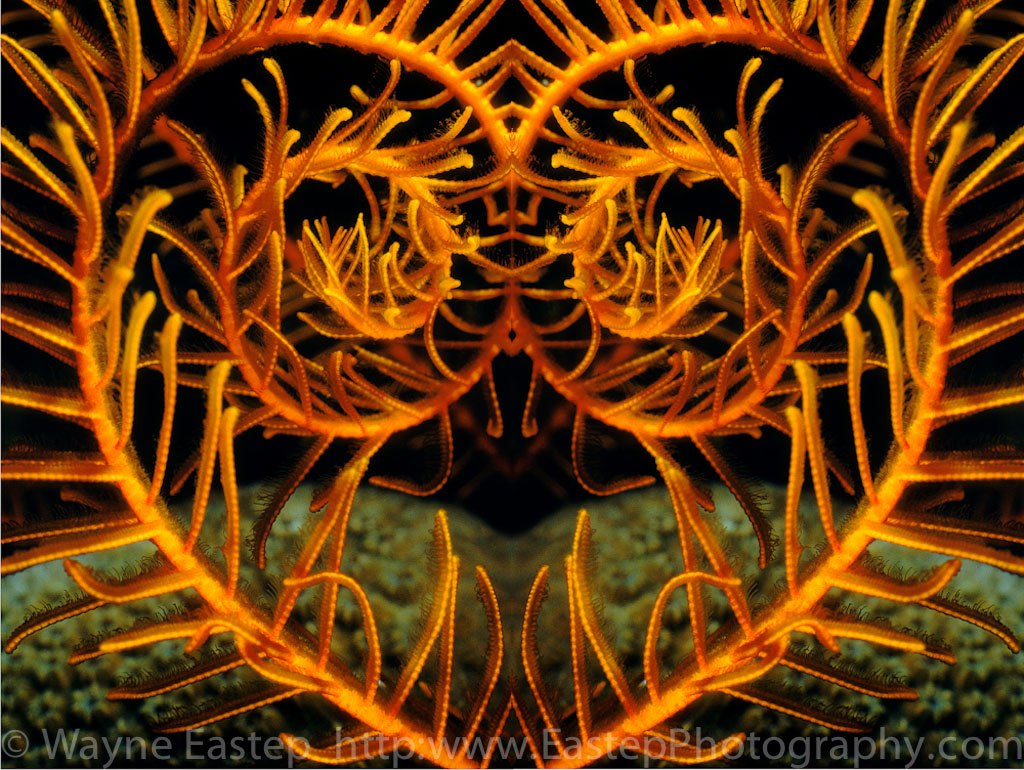
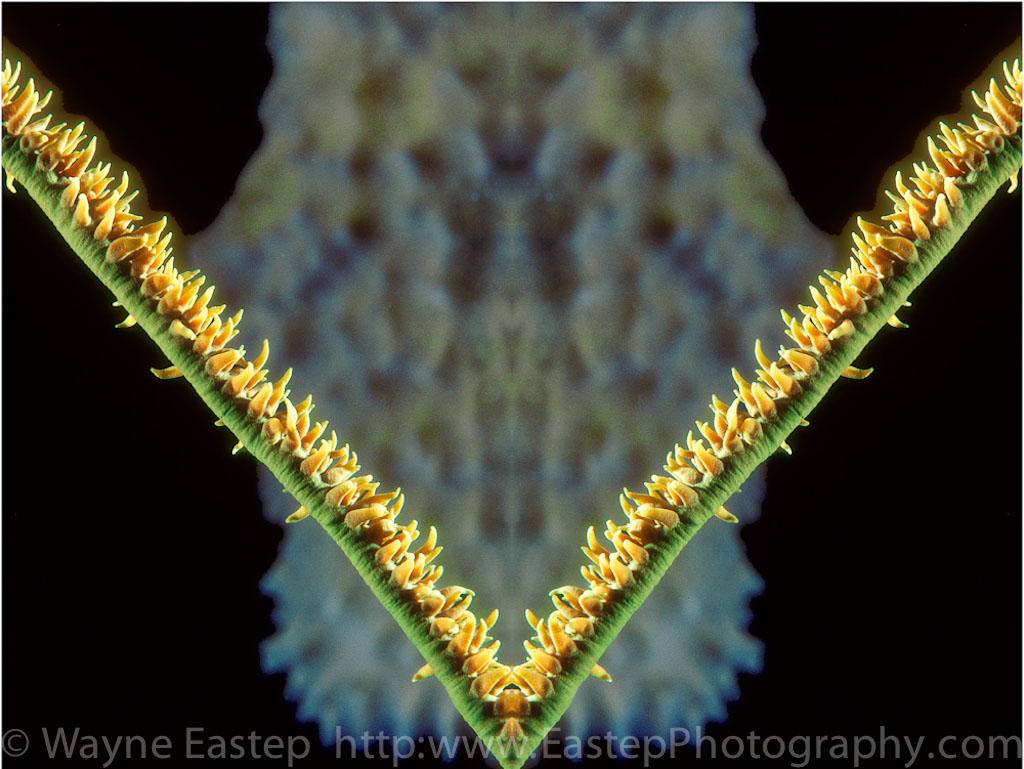
A few years ago a project came along which gave me the opportunity to work with one of the finest designers in America, Chip Reay. Chip selected from my underwater images ones which had clean simple design . He played with the photographs by making a duplicate of the image, flipping it and merging it with the original. the result was a wonderful mirror image, a delightful rorschach. These three images are examples of his successful collaboration with my photographs.
To see more underwater images visit my Image Archive: EastepPhotography.com
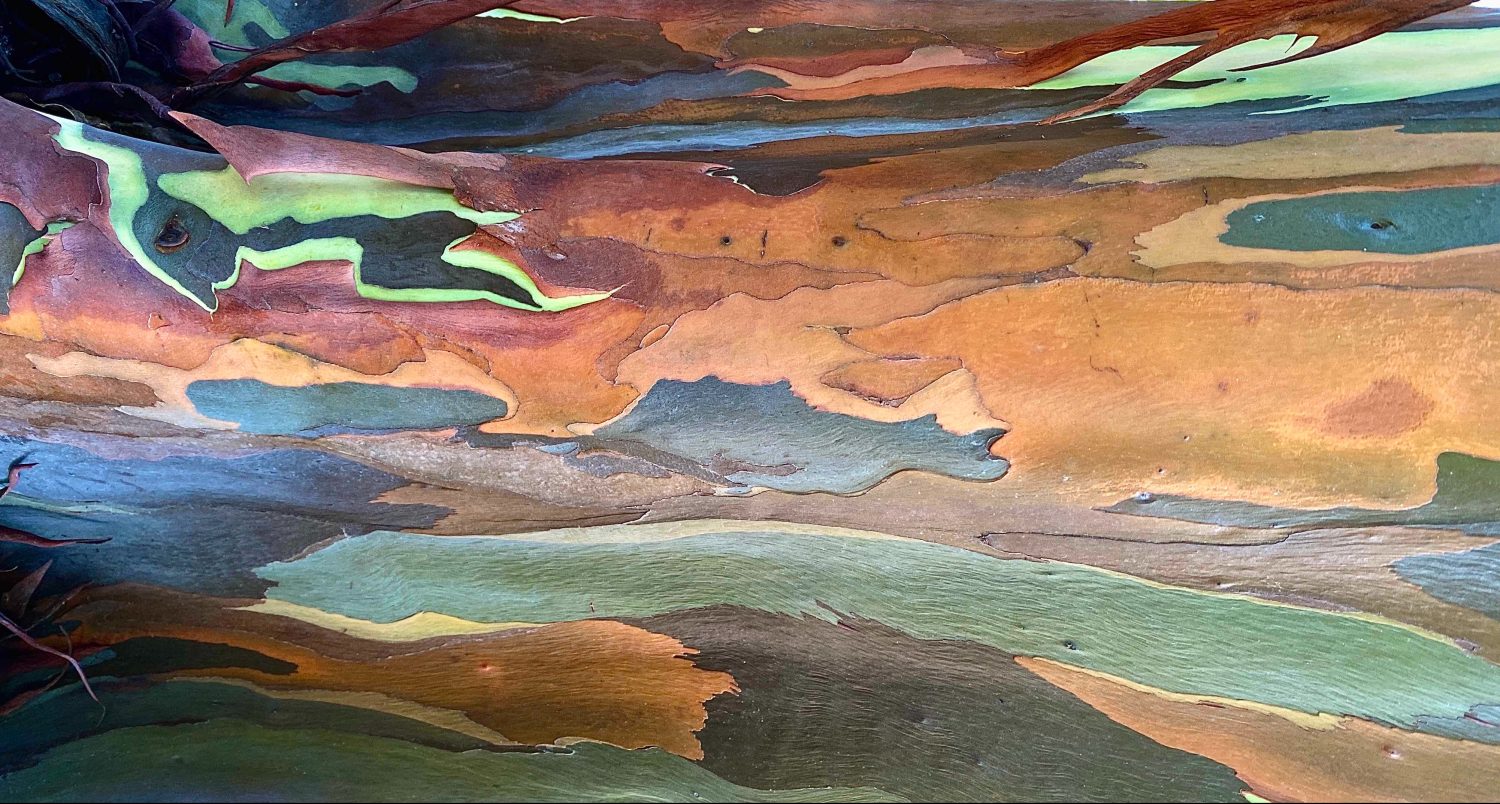
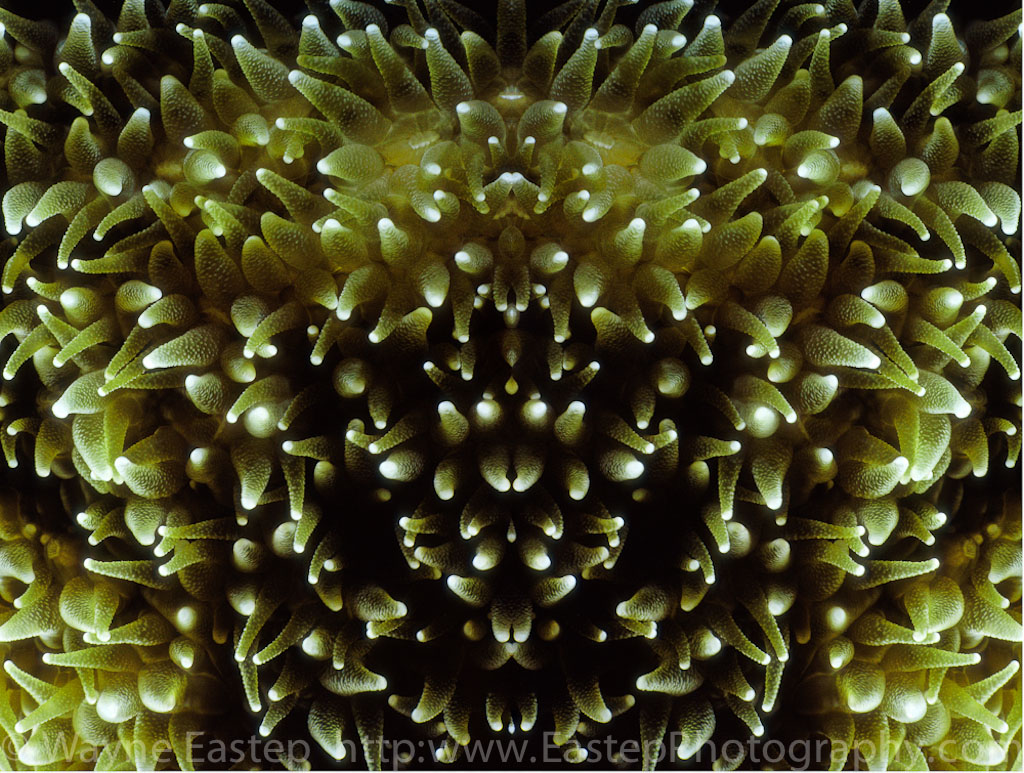
When I first saw pillar coral I was amazed by the sense that light was being emitted from within the undulating tentacles . Coral is one of those phenomenal life forms being both animal and plant.
This image is another example of the beautiful design found in nature.
More underwater images can be seen at my image archive: EastepPhotography.com
Life underwater is a world of dreamlike images. The surprising luminosity, electric color and intriguing shapes are what interest me. Exploring this magical realm is a transcendent experience.
To see more underwater image visit my Image Archive: EastepPhotography.com
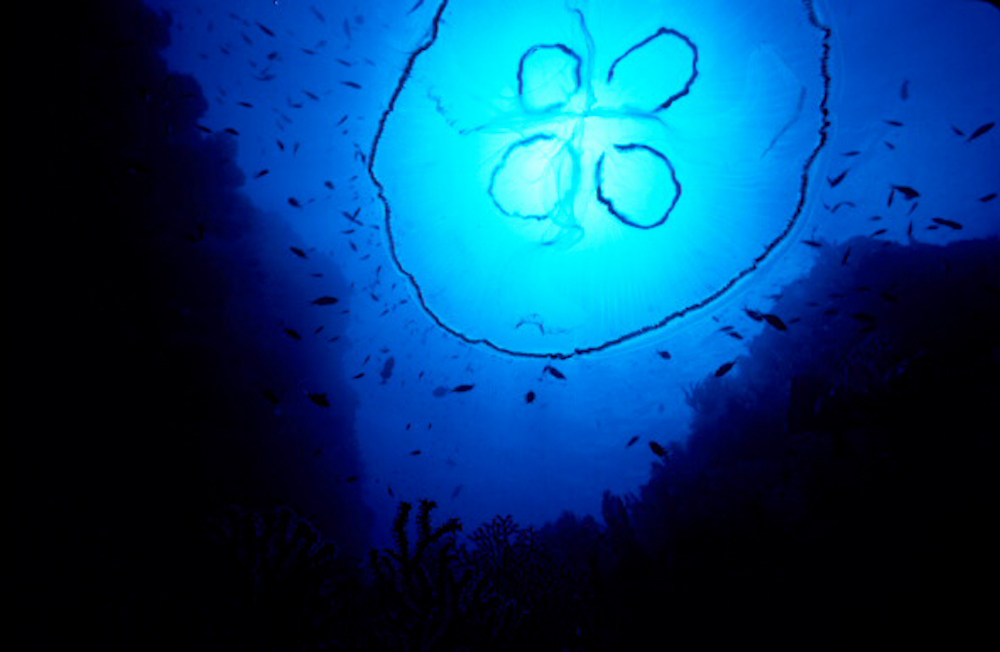
When Diana Nyad completed her 110 mile swim from Cuba to Key West on September 2, 2013 it rekindled memories of my encounters with jellyfish in the Caribbean. While photographing underwater for the book The Living Seas I swam into a swarm of jellyfish. I experienced how this magnificent creäture can be threatening.
Jellyfish sting in defense and as a way to attack prey. The tentacles are covered with thousands of cells with stinging threads. These stinging cells shoot out like darts shooting venom with the goal of paralyzing. This action is capable of killing smaller marine creatures. From first hand experience I can tell you that the effect on humans is pain, skin rashes, fever and muscle cramps. Given that I was underwater when stung I did not have close at hand vinegar, rubbing alcohol, meat tenderizer or or baking soda. I did have one of the more effective antidotes, urine. Trust me it works.
In spite of the potential hazard I was drawn back again and again with the goal of creating images which would celebrate the otherworldly beauty of the jellyfish.
I salute Diana Nyad.
To see additional underwater images visit my Image Archive: EastepPhotography.com
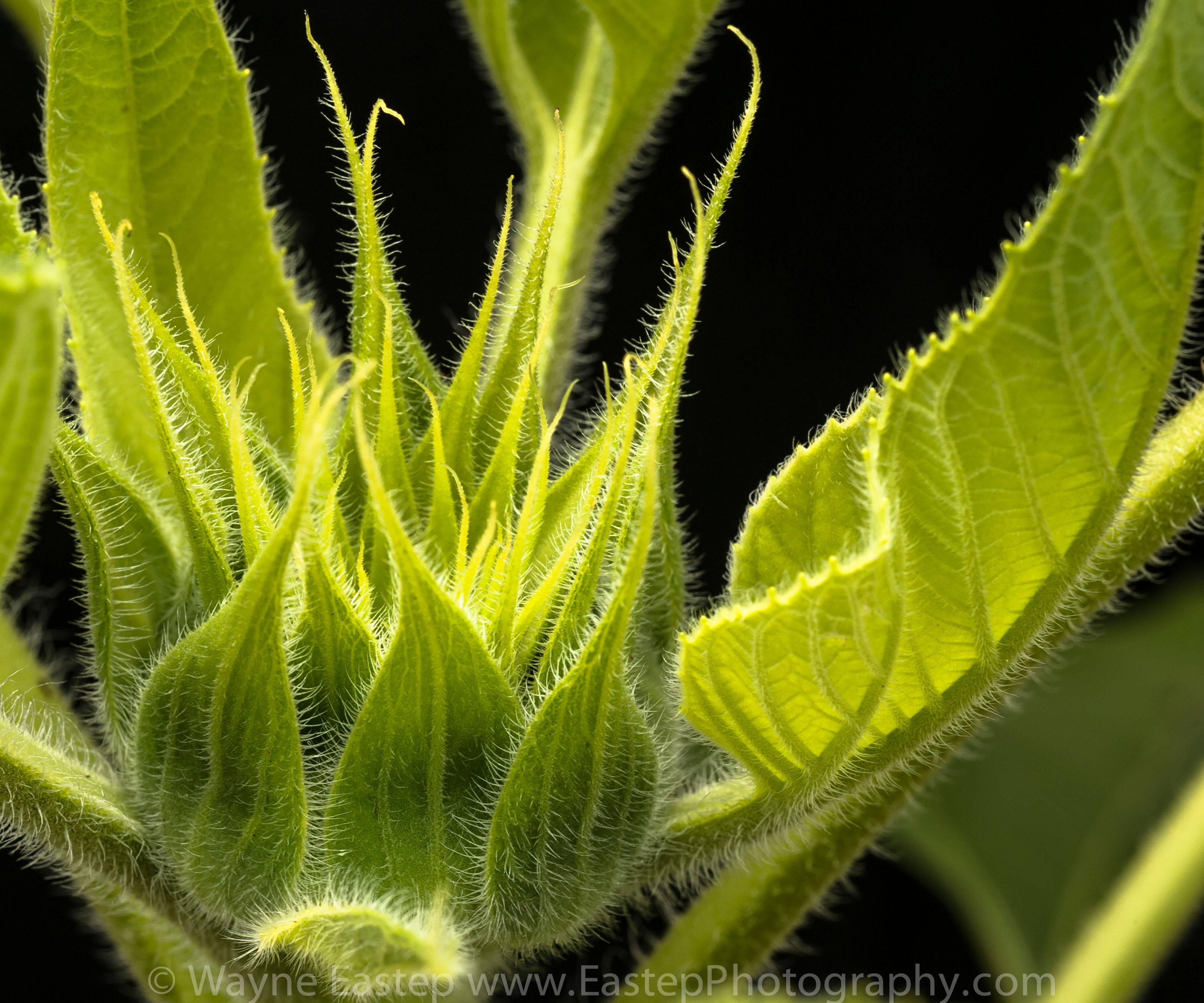
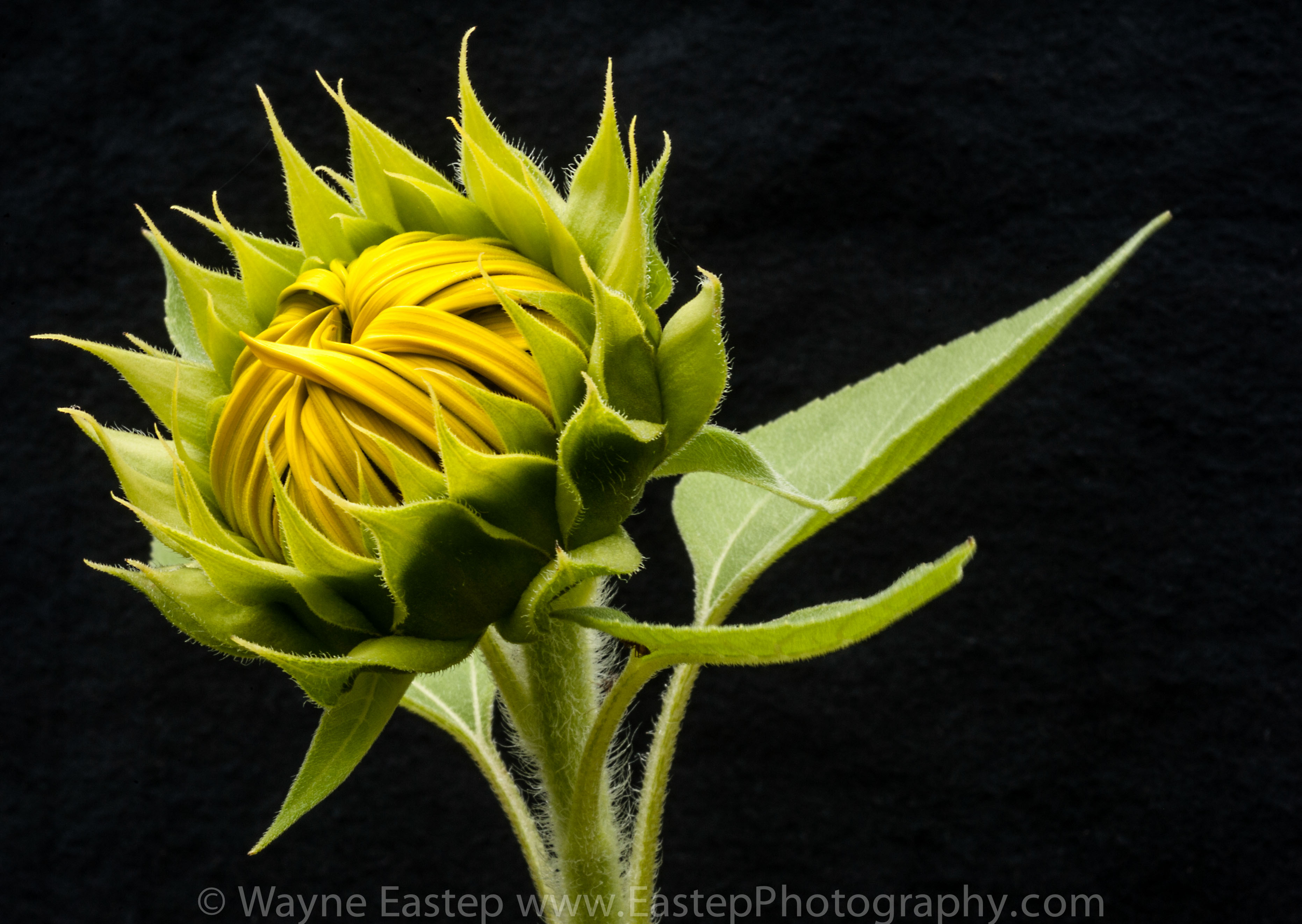
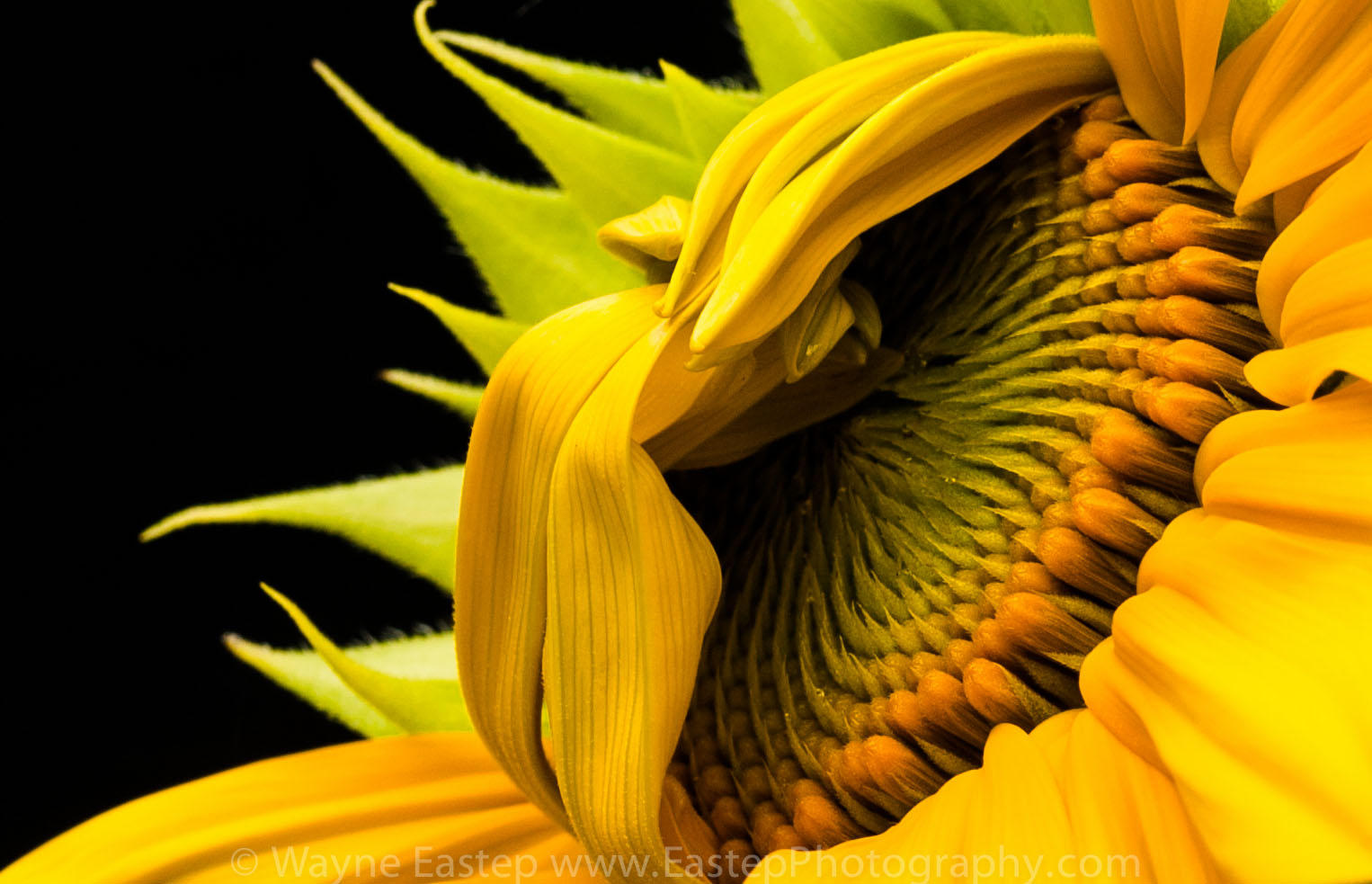
Sunflower plant forming a flower bud.
The nexus between art and science intrigues me. The more I look, study and reflect on the design within nature the more I appreciate the relationship between science and art. The elegant design of the sunflower is a good example of this relationship. There is something in the design of a sunflower that informs our perception and moves us to call it beautiful. When we study the structure of the sunflower we discover that the beauty is a combination of art and science.
The flower petals within the sunflower’s cluster are always in a spiral pattern. Generally, each floret is oriented toward the next by approximately the golden angle, 137.5 degrees, producing a pattern of interconnecting spirals, where the number of left spirals and the number of right spirals are successive Fibonacci numbers. This pattern produces the most efficient packing of seeds within the flower head.
This past spring I planted sunflowers seeds then watched and photographed them from seedlings to mature plants. These images were made from those plants. To see additional images of the sunflowers I grew visit my image archive; EastepPhotography.com
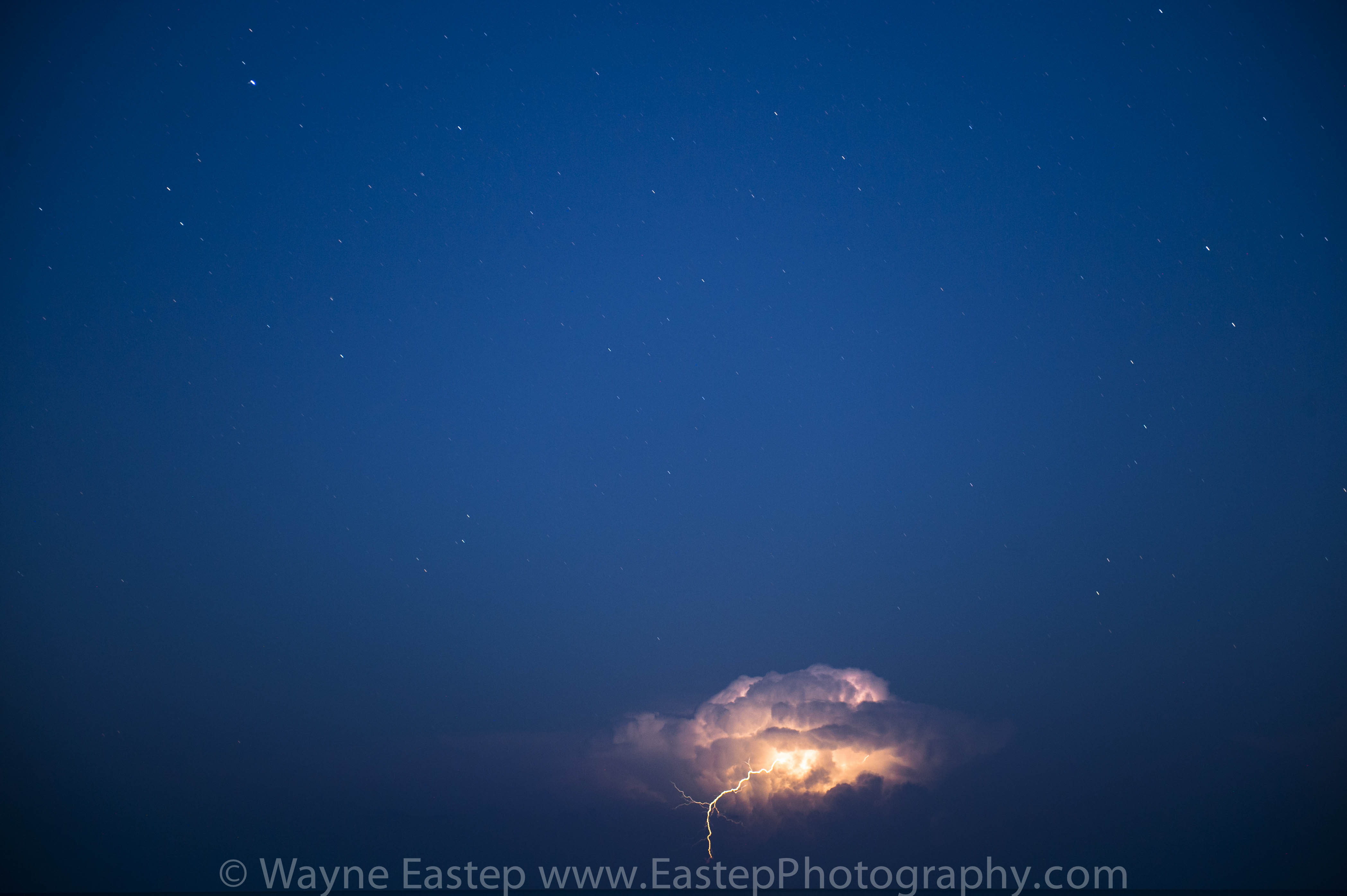
One of the things about photography that still catches my attention is that I often see more than I thought I’d see. Around 4 am this morning I went out to see the Perseid Meteor Shower. I was delighted to see a few meteors. I was thrilled to watch a distant thunderstorm move toward me across the Gulf of Mexico.
Black birds flying at the break of dawn.
From the Fine Art Collection visit EastepPhotography to see more
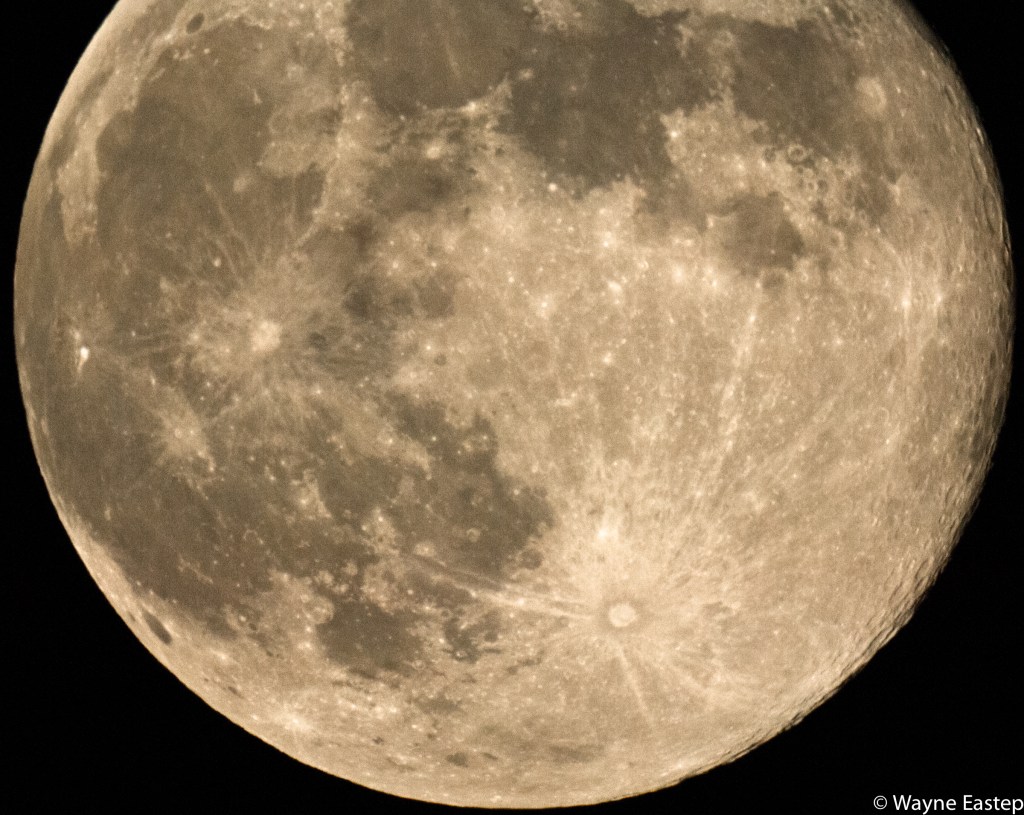
Neil Alden Armstrong an astronaut and first man to walk on the moon was laid to rest yesterday, August 31, 2012. Coincidentally last night was a “Blue Moon” (a second full moon during the same month). My sense of wonder was inspired by Neil Armstrong. Thank you Mr. Armstrong.

Carolina anole (Anolis carolinensis) is the only anole native to the United States. Sarasota, Florida
A few days ago I posted an image of a Cuban Anole. They were brought to Florida from Cuba in plants. They are aggressive and have driven the Green Anoles away. The Carolina anole (Anolis carolinensis) is the only anole native to the United States. They are also called American chameleon. I was photographing a unique cactus which is about to flower and this Green Anoles came marching into view.
To see more nature studies visit: EastepPhotography.com