I hear and I forget, I do and I understand, I see and I remember
Category Archives: Energy
Abstract Images are a common feature in our minds and world
Abstract art can help us see parallels and sense echoes between our aesthetic expression and forms in science and nature.
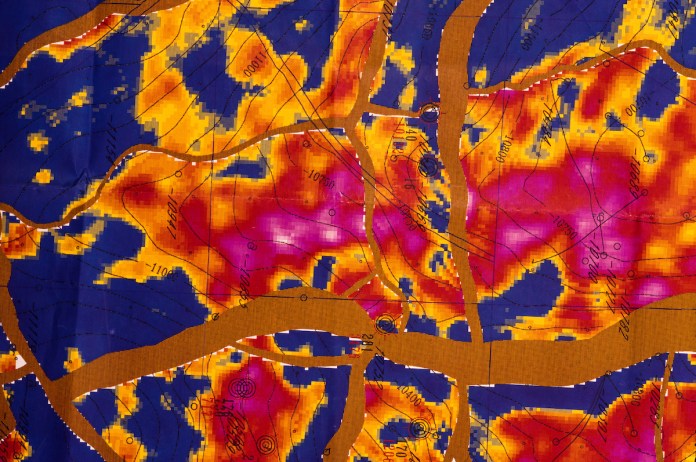
Sonar Image, floor of the Gulf of Mexico
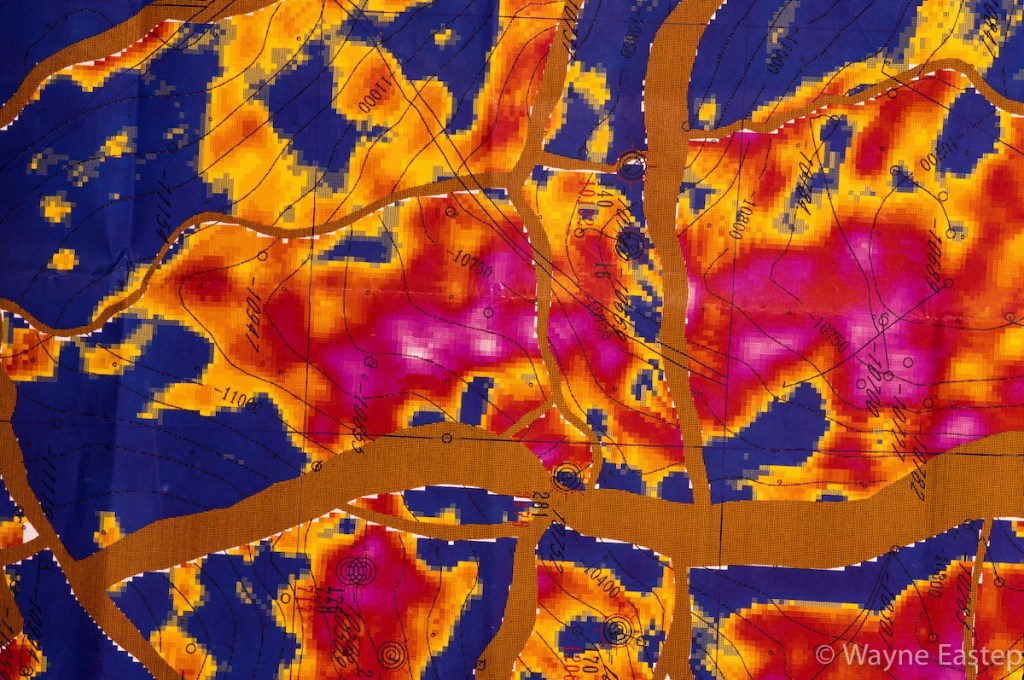
At first glance, these images appear to be abstract art. Under closer examination, we see that they are scientific images of the ocean floor indicating deposits of gas, crude oil, and voids.
Sonar image of oil and gas reserves, Gulf of Mexico
Imaging of the brain produces similar abstract images. We have a natural capacity to know these shapes and use them in abstract art. Upon deeper reflection, we realize that we have the capacity to understand and express these insights through art. The cognitive function of the brain is what we refer to as the mind. Therein lies a universe of symbols and archetypes that manifest as innate knowledge. This may be why we are touched by abstract art. The art does not objectively describe something that exists as an object. It expresses something that we feel and know, almost like a memory from a dream
Sonar Imaging showing oil and gas reserves, Gulf of Mexico
To see these images and others in my photographic archive, visit my website: WayneEastep.com
What it looks like to replace Russian oil and gas.
Internal view of a furnace used to “crack” heat crude oil in the refining process.
Turning away from the use of oil and gas from Russia can be accomplished. What is needed includes; finding other supply sources, building new receiving ports, retrofitting existing refineries, expanding production, marshaling major engineering capacity, major capital investment, and time. Putting in place what is needed cannot happen in a few months. It will take a year for the quick changes and a number of years for a major realignment.
Understanding the petroleum industry by reading about it with all its unique jargon: “upstream-downstream,” Fluid Catalytic Cracking, Floating Production Storage and Offloading, Crude Assay, Sweet and Sour Crude Oil, etc., quickly becomes confusing.
Images offer the possibility of getting our minds around what these words mean and how the energy industry works. So I’ve compiled a set of pictures showing what’s involved in the supply chain of oil and gas worldwide in order to understand what the challenges and costs are in creating an alternative to dependence on Russian oil and gas.
Finding the oil and gas.
Locating sources of oil and gas is an industry unto itself and requires significant investment, risk, and commitment of time.
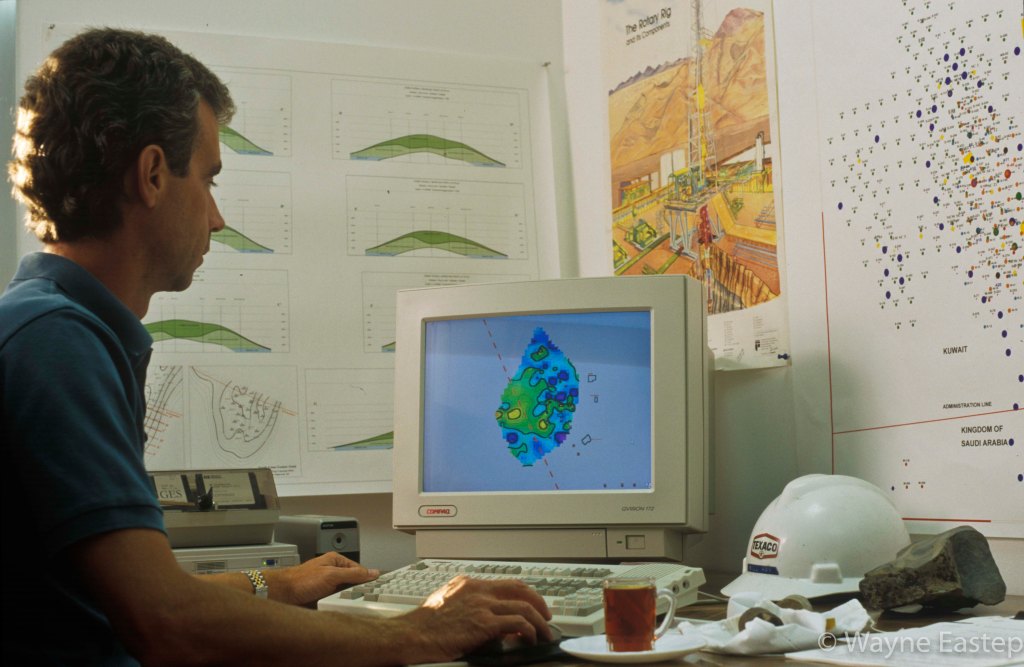
A geologist working on exploration of oil and gas, KuwaitSonar imaging of oil sources, Gulf of Mexico
Crude Oil Exploration
More often than not, places, where crude oil is found, are deserts and oceans. Advanced technology today helps reduce some of the risks by quantifying possible amounts of oil and gas at specific locations. The exploration process still comes down to drilling a hole in the earth, often thousands of feet, to reach a crude oil or natural gas source. The drilling rigs on land and offshore are an industry unto themselves and include names like Schlumberger, Valaris, Halliburton, Baker Hughes, Nabors, China Oilfield Services Limited, and Petrofac, to name a few.
Crude Oil Drilling Rig, KuwaitDrilling rigs North Sea, Scotland Offshore drilling rig, Gulf of Mexico
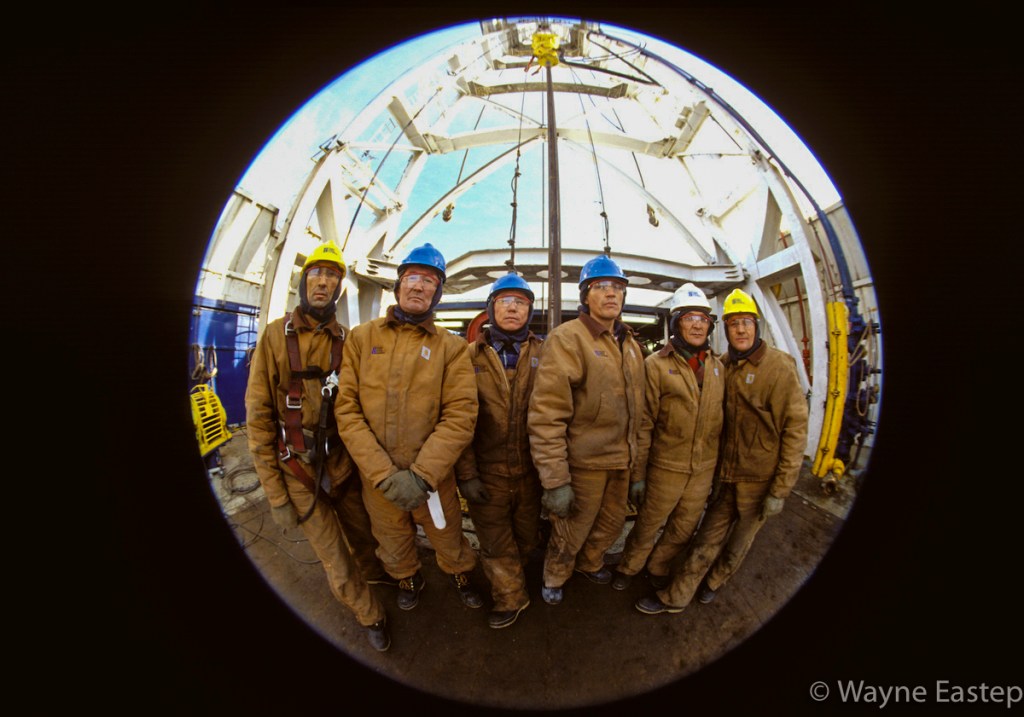
Roughnecks, Louisiana
Roughnecks, on land drilling rig, KazakhstanCrude oil pump, Saudi Arabia Offshore drilling rig, Persian Gulf Offshore crude oil drilling rig being built for exploration in the Caspian Sea, Baku, Azerbaijan.
All in One Operations
Then there are “all in one” exploration drilling, processing, and shipping operations like the Tension leg platform, Floating Production Storage, and Offloading operation at Kizomba, Angola. Basically, these operations drill for crude oil, process it onsite then load it onto supertankers at the offshore location. Off the supertanker goes to deliver oil to a client.
Drilling rig on the left, Floating Production Storage for processing crude oil and a supertanker being filled up. Kizomba, Angola.
Shipping and Storage
Crude oil must be moved from its source to refineries where it can be processed into usable products like gasoline and diesel.
Supertanker offshore waiting to unload crude oil at a refinery in Kuwait for processing into petroleum products.
Storage operation in Saint Lucia for unloading some of the largest supertankers which require deepwater ports. The crude oil is stored, then transferred to ships that can enter the port at a refinery in St. Croix.
Tankers offloading crude oil and loading refined petroleum products at a refinery in St. Croix, US Virgin Islands.
Processing crude oil into petroleum products; gas and diesel.
Turning crude oil into usable products like gasoline and diesel fuel is done at refineries like this one in St. Croix.
Construction of an LNG Train for converting natural gas into Liquefied Natural Gas, Ras Laffan, Qatar.
LNG refinery: Ras Laffan, Qatar. The plant converts natural gas into Liquified Natural Gas called LNG. The process uses three steps, gas treatment, gas compression, and refrigeration. LNG from Qatar could possibly become a source for Europe to replace the LNG they import from Russia.
An LNG pipeline connecting the Ras Laffan refinery to the port where special ships for transporting LNG take the gas and deliver it to customers worldwide. The LNG port at Ras Laffan, Qatar. A tanker designed specifically for transporting liquified natural gas.
Trains and Pipelines
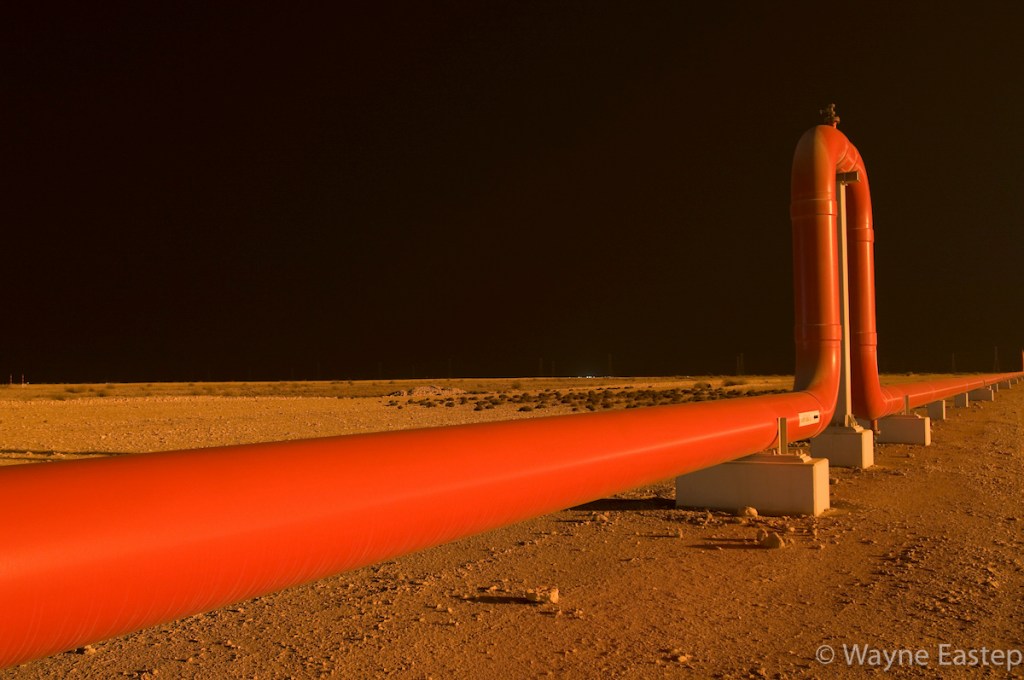
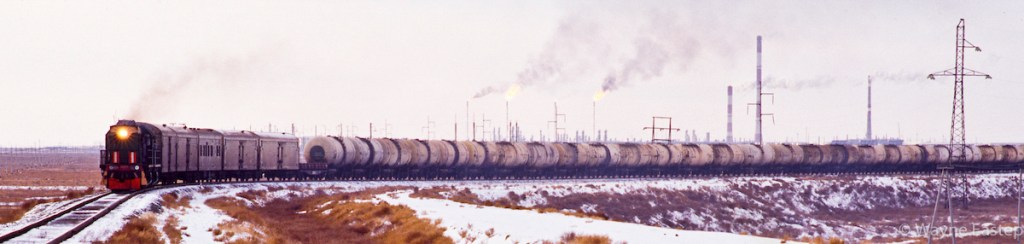
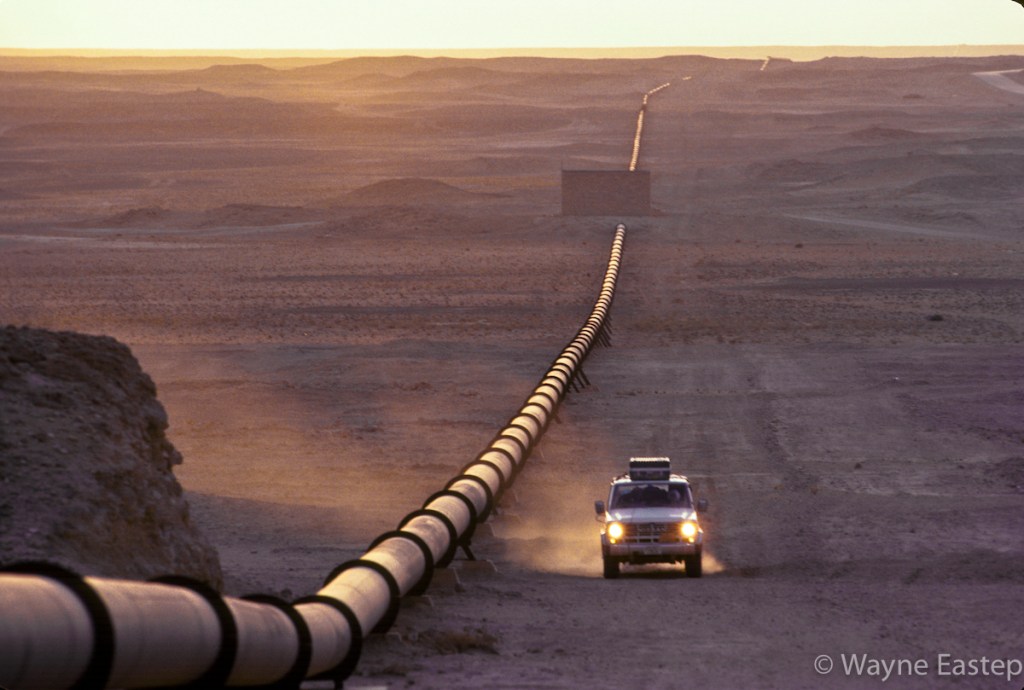
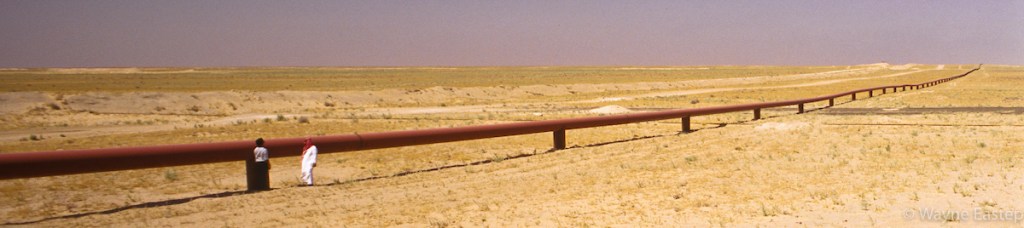
Other methods used to transport crude oil and petroleum products include trains and pipelines.
Rail tanks are used to transport crude oil and processed petroleum products. Sarpom shipping yard, Trecate, Italy.
A train transporting gas from the Tengiz Refinery in Kazakhstan.
Oil Pipeline, northeastern Saudi Arabia near the Iraqi border
Crude oil pipeline, Kuwait.
A primary source of fact and insight about world energy can be found in the writings of Dr. Daniel Yergin, who is an American energy expert, economic historian, speaker, author, and Pulitzer Prize, winner. His most recent book, The New Map, is a timely read about geopolitics, the global economy, and energy. To learn more visit https://www.DanielYergin.com
Balancing energy needs for the short term and long term
Before Russia’s invasion of Ukraine, the world was engaged in an existential struggle: how to deal with the accelerating negative impact of climate change. Countries are still in a struggle with each other about how best to shift from fossil fuels to clean, sustainable energy. The urgency to find alternatives to oil and gas from Russia must simultaneously be met with concrete actions by countries worldwide to respond to climate change. The world order is under threat as a result of Russia’s war, and the catastrophic effects of climate change threaten life in our home, the earth. The challenge is whether we choose law over force to respond to Russia’s invasion. We also have a challenge of consciousness. Can we acknowledge our interdependence and work for the common good?
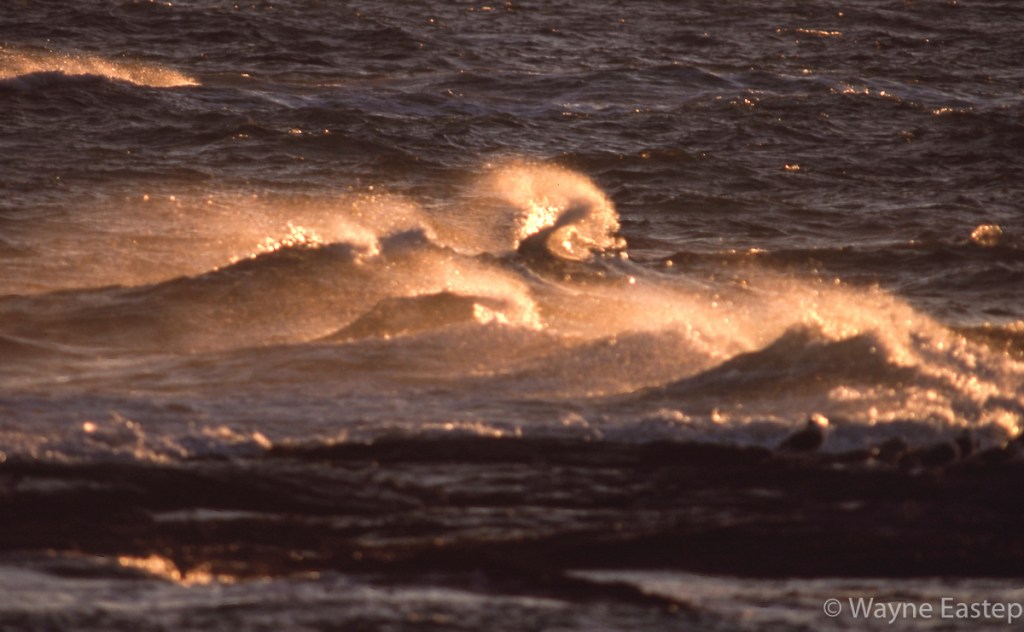
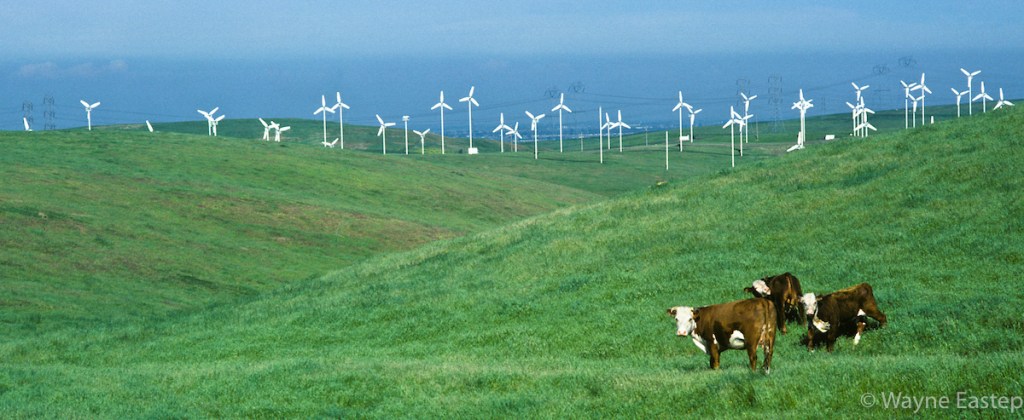
Electricity Solar Water Wind
Text and Images by Wayne Eastep
To see more images visit the energy collection at my website WayneEastep.com















 wayne eastep's blog